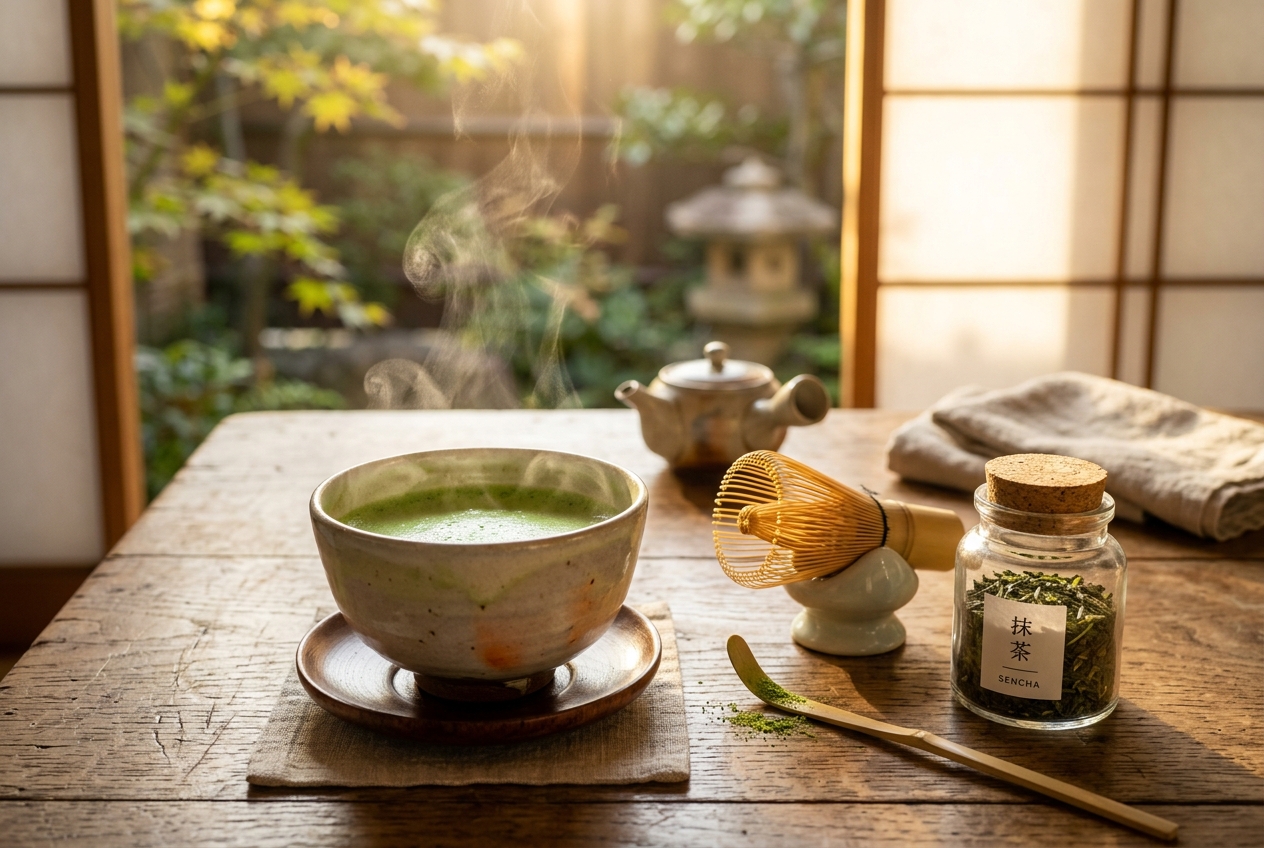
Every morning, millions of people reach for coffee. The ritual is automatic — grind, brew, sip. But a quieter, older ritual is making a serious comeback: starting the day with green tea. And unlike trend-driven health fads, the science behind green tea is deep, consistent, and genuinely compelling.
This isn't about swapping one drink for another. It's about understanding why green tea — when prepared mindfully and consumed consistently — works so differently from coffee. The answer lies in what's inside the leaf, and how those compounds interact with your brain, your metabolism, and your stress hormones the moment you take that first morning sip.
What's Actually Inside Green Tea
Green tea is far more than a mild stimulant. One cup (240ml) of brewed green tea contains roughly 28mg of caffeine — about one-third of what you'd get from a typical coffee. But the real story is in the polyphenols, particularly a group called catechins. The most studied and potent of these is epigallocatechin gallate (EGCG), which accounts for 50–80% of the catechins in green tea leaves.
EGCG is a powerhouse. Research published in the Journal of Nutritional Biochemistry has shown it exhibits strong antioxidant activity far exceeding that of vitamin C and vitamin E. It scavenges free radicals, reduces oxidative stress, and has been studied extensively for its role in supporting cardiovascular health, metabolic function, and even healthy weight management.
Green tea also contains L-theanine, a unique amino acid found almost exclusively in tea leaves. This is the compound that separates green tea from other caffeinated beverages. L-theanine promotes alpha brain wave activity, inducing a state of relaxed alertness. It crosses the blood-brain barrier and directly influences neurotransmitters: increasing GABA, dopamine, and serotonin levels. The result? Focused calm instead of jittery energy.
The Caffeine-L-Theanine Synergy: Why Green Tea Feels Different
If you've ever noticed that green tea delivers energy without the crash, you're not imagining it. The combination of caffeine and L-theanine in green tea is synergistic. A 2008 study published in Nutritional Neuroscience found that this combination significantly improved both attention and mood compared to caffeine alone. The L-theanine smooths out caffeine's stimulatory effects, resulting in a more sustained, even-keeled alertness.
This is particularly relevant for mornings. Cortisol levels naturally peak in the early morning hours (around 7–9 AM), which is why that's often when people feel most alert. Drinking green tea during this window works with your natural cortisol rhythm rather than against it. The moderate caffeine dose (~28mg per cup) provides a gentle boost while the L-theanine takes the edge off any anxiety that can come with high caffeine intake.
For those who've abandoned coffee due to jitters or anxiety but still want morning cognitive support, this synergy is the key reason green tea is worth considering. It's a tool for clarity, not just stimulation.
Antioxidant Power: EGCG and Cellular Health
Oxidative stress — the accumulation of free radicals that damage cells over time — is now understood to be a core driver of aging and chronic disease. Antioxidants neutralize these free radicals, and green tea is one of the richest dietary sources of them.
The ORAC (Oxygen Radical Absorbance Capacity) scale, developed by the USDA to measure antioxidant potency in foods, rates green tea very favorably. But beyond the numbers, what does this mean in practice? Consistently consuming green tea catechins like EGCG has been associated in research with reduced markers of oxidative stress, support for healthy lipid profiles, and protective effects on endothelial function (the lining of your blood vessels).
A landmark study published in the Journal of the American Medical Association tracked over 40,000 Japanese adults for up to 11 years and found that regular green tea consumption was associated with significantly reduced cardiovascular mortality. The participants who drank 5 or more cups per day had a 26% lower risk of dying from cardiovascular disease compared to those who drank less than one cup per day. That's not a trivial effect size.
Building Your Morning Green Tea Ritual
The word "ritual" matters here. A 2017 study published in Mindfulness found that performing daily activities with intentionality and focus — what the researchers called "procedural mindfulness" — significantly reduced cortisol levels and improved subjective well-being. The ritual of preparing green tea — heating water to the right temperature, steeping for the right duration, sitting with the cup — is itself a mindfulness practice that amplifies the drink's benefits.
Here's how to build an evidence-informed morning green tea ritual:
1. Water Temperature — For sencha and other Japanese green teas, use water at 160–170°F (70–80°C). Boiling water (212°F) will make the tea bitter by extracting too many tannins too quickly. For matcha, use heated (not boiling) water around 175°F. The lower temperature preserves the delicate catechins and L-theanine.
2. Steep Time — 1–3 minutes for sencha, depending on preference. Longer steeping extracts more caffeine and catechins but also more bitterness. 2 minutes is a good starting point for a balanced extraction.
3. Quantity — One to three cups per morning is the sweet spot based on the research literature. This delivers meaningful doses of EGCG and L-theanine without excessive caffeine intake. If you're caffeine-sensitive, start with one cup.
4. Timing — Drink your first cup within 30–60 minutes of waking. This aligns with your natural cortisol awakening response and allows the L-theanine to ease you into the day. Avoid green tea after 2 PM if you're caffeine-sensitive — the half-life of caffeine is 5–6 hours.
5. Preparation Method — Matcha (powdered green tea) offers a more concentrated dose of everything — more caffeine, more L-theanine, more EGCG. If you want a more potent ritual, a morning matcha (1/2 teaspoon whisked in 4–6 oz of water) is a legitimate approach. Traditional sencha in a mug offers a more moderate, hydrating experience.
Green Tea and Metabolic Health
The relationship between green tea and metabolic health is one of the most well-researched areas. EGCG has been shown in numerous randomized controlled trials to modestly increase metabolic rate — by approximately 4–6% in several studies — primarily through norepinephrine-induced thermogenesis. Norepinephrine is a hormone that signals fat cells to release fatty acids for energy, and EGCG inhibits the enzyme that normally breaks it down, extending its fat-burning signal.
Beyond thermogenesis, green tea catechins have been shown to improve insulin sensitivity. A meta-analysis published in Diabetes Care found that green tea consumption significantly reduced fasting glucose and HbA1c levels in people with type 2 diabetes. For those without diabetes, this suggests green tea supports healthy blood sugar regulation — something critically important in the morning hours when blood glucose naturally rises after the overnight fast.
The gut health angle is also worth noting. Emerging research suggests green tea polyphenols may act as prebiotics, selectively feeding beneficial gut bacteria like Bifidobacterium and Lactobacillus species. A 2020 study in Scientific Reports found that regular green tea consumption was associated with greater microbial diversity and higher abundances of beneficial bacterial species — an indirect but meaningful pathway for immune and metabolic health.
What to Look for in a Quality Morning Green Tea
Not all green tea is created equal. The catechin and L-theanine content varies significantly based on growing conditions, harvest time, processing method, and freshness. Here's what to prioritize:
Look for single-origin, shade-grown Japanese teas like sencha or gyokuro. Shade growing increases chlorophyll content and the production of L-theanine, giving you more of the calm-focus benefits. Gyokuro, which is shade-grown for longer periods, can have 2–3 times the L-theanine content of standard sencha.
For matcha, choose ceremonial grade from Japan rather than culinary or commodity matcha. Ceremonial matcha is made from younger leaves, has a sweeter, less bitter flavor profile, and contains higher concentrations of the beneficial compounds. It's worth the price difference if you're making it a daily practice.
Storage matters too. Green tea is sensitive to heat, light, and oxygen. Buy in small quantities (enough for 1–2 months), store in an airtight container in the refrigerator, and keep away from strongly aromatic foods — tea absorbs odors.

Ippodo Sayaka Sencha — Premium Japanese Green Tea
Ippodo is one of Japan's most respected tea houses. Sayaka Sencha delivers a perfectly balanced umami, sweetness, and mild astringency — ideal for a daily morning ritual. Shade-grown for enhanced L-theanine content.
View Price & DetailsA daily morning green tea habit is one of the most elegant, low-effort, high-reward health practices you can adopt. You're not just drinking a beverage — you're performing a small act of intentional living that compounds over time. The EGCG supports your cells. The L-theanine supports your mind. The ritual itself supports your nervous system.
Start tomorrow morning. One cup. Done properly. Your body and brain will thank you.
Watch: The Science Behind Green Tea Benefits
This post contains affiliate links. If you purchase through our links, we may earn a small commission at no extra cost to you.