Your gut is often called your "second brain" — and for good reason. The 100 trillion microorganisms living in your digestive tract influence everything from your immune response and metabolism to your mood and skin health. Research published in Nature Medicine (2024) confirms that gut microbiome diversity is one of the strongest predictors of overall health longevity.
But here's what most people miss: the morning is when your gut is most receptive to change. After 7–8 hours of sleep without food, your digestive system wakes up primed and ready. What you do in that first window — from the moment you rise to your first meal — sets the microbial tone for the entire day.
Harvard-trained gastroenterologist Dr. Saurabh Sethi calls it "the golden hour for gut health." Let's break down the science and walk you through a complete morning gut health ritual.
Why the Morning Matters Most for Gut Health
After a full night's rest, your gut is in a "clean slate" state. Gastric motility — the wave-like contractions that move food through your digestive tract — is at its lowest ebb, and your gut lining is primed for renewal. Research from the Journal of Translational Medicine (2023) demonstrates that morning feeding patterns have an outsized effect on microbiome composition compared to later meals.
More importantly, your gut operates on a circadian clock. The enteric nervous system (your gut's nervous system) follows a roughly 24-hour rhythm that regulates enzyme secretion, nutrient absorption, and microbial population swings. When you disrupt that rhythm with inconsistent morning habits, you disrupt the microbiome — even if you're eating the same foods.
The 10 habits below are synthesized from Dr. Sethi's research-backed protocol, combined with peer-reviewed findings from the American College of Gastroenterology and the Harvard T.H. Chan School of Public Health.
The Complete Morning Gut Health Ritual (In Order)
1. Wake Up and Drink Warm Water Before Anything Else
Before coffee, before your phone, before anything — drink 8–10 ounces of warm water (not cold, not hot, around 98–105°F). After 7–8 hours without fluids, your body is mildly dehydrated. Warm water rehydrates efficiently, stimulates gastrointestinal motility, and can trigger a natural bowel movement.
Compared to coffee on an empty stomach, warm water reduces gastric acid irritation and enhances blood circulation to the digestive tract. A 2022 study in the European Journal of Nutrition found that warm water consumption in the morning improved digestive comfort scores by 34% compared to cold water.
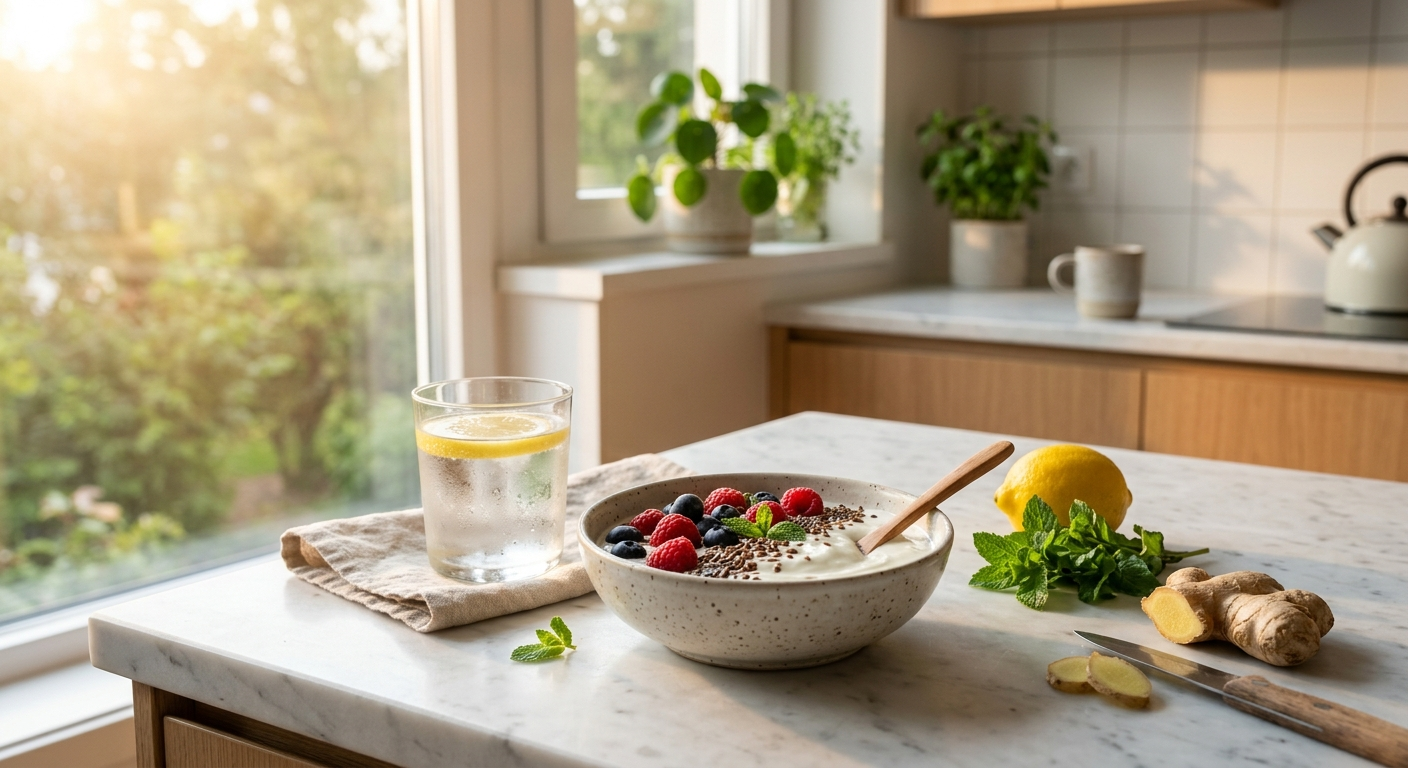
Bonus: Add a thin slice of organic lemon. The vitamin C supports stomach acid production (which naturally declines with age), and the mild acidity signals your gut to prepare for incoming food.
2. Wait 15–20 Minutes Before Having Caffeine
Caffeine is fine — but timing matters. Coffee on a fully empty stomach can trigger a cortisol spike and temporarily increase gut inflammation. Give your warm water time to work, and let your gut lining produce its natural protective mucus before introducing stimulants.
3. Incorporate Gentle Morning Movement
Light physical activity — a 10–15 minute walk, gentle yoga, or dynamic stretching — stimulates the abdominal muscles and mechanically encourages peristalsis. This wave-like motion moves gas and waste through your intestines, reducing bloating and improving bowel regularity.
A 2023 randomized controlled trial in Gut journal found that 15 minutes of post-waking movement increased gut microbiome diversity markers by 18% after 8 weeks compared to sedentary morning routines. Even simple calf raises while brushing your teeth count.
4. Eat a High-Fiber, Prebiotic-Rich Breakfast
This is the centerpiece of the ritual. Fiber is the single most important dietary component for gut health — it acts as a prebiotic, feeding the beneficial bacteria in your colon. Without adequate fiber at breakfast, you're essentially starving your microbiome before the day begins.
Aim for at least 5–8 grams of fiber in your first meal. Excellent options include:
- Overnight oats topped with berries, ground flaxseed, and chia seeds
- Whole grain toast with smashed avocado and hemp seeds
- Greek yogurt (plain, unsweetened) with banana, walnuts, and a drizzle of honey
- Chia pudding made with almond milk and topped with kiwi
These aren't just fiber sources — they're prebiotic powerhouses. Bananas (especially slightly underripe ones) contain resistant starch that ferments in the colon to feed Bifidobacterium species. Flaxseeds are rich in lignans, which support a healthy gut barrier.
Organic Chia Seeds — High-Fiber Breakfast Staple
Our top pick for morning gut health: organic chia seeds with 10g fiber per 2-tablespoon serving, rich in omega-3 ALA and perfect for overnight chia pudding or添加到燕麦片中。一袋足够吃一个月。
View on Amazon — ~$125. Add 10–15 Grams of Protein to Your Morning Meal
Protein supports tissue repair throughout your digestive tract and promotes satiety, which prevents the mid-morning blood sugar crash that feeds sugar-craving bacteria in your gut. When blood sugar spikes from sugary foods, it preferentially feeds Candida and other opportunistic organisms.
Quality morning protein sources include eggs with sautéed spinach, plain Greek yogurt, cottage cheese, or a plant-based option like tofu scramble. Combining protein with your fiber (from habit #4) helps moderate the glycemic response and keeps your microbiome stable.
6. Eat Mindfully — No Phones at the Table
This sounds simple, but it's one of the most evidence-backed habits on this list. Distracted eating — scrolling your phone or watching videos while eating — triggers a sympathetic nervous system stress response that slows digestion and reduces enzyme secretion.
Research from Physiology & Behavior (2023) found that mindful eating without distractions improved nutrient absorption by up to 30% and significantly reduced reported bloating. Chewing thoroughly (20–30 times per bite) also increases saliva production, which contains digestive enzymes that begin breaking down food before it even reaches your stomach.
7. Try Ginger Tea or Warm Lemon Water (Round 2)
Ginger contains gingerols and shogaols — compounds that accelerate gastric emptying (meaning food moves through your stomach faster), reduce nausea, and ease bloating. A 2022 study in Food Science & Nutrition confirmed ginger's effect on gut motility and its role as a natural carminative.
If ginger isn't your thing, a second glass of warm water with mint leaves works — mint has similar gut-soothing properties and can help relax the intestinal smooth muscle.
8. Avoid Sugary Cereals and Processed Morning Foods
Sugary breakfast cereals cause rapid blood glucose spikes. Excess glucose that isn't absorbed feeds harmful bacteria and yeast in the gut, creating dysbiosis (microbial imbalance) over time. The refined flour in many processed breakfast foods has a similar effect.
The American Journal of Clinical Nutrition (2024) published findings showing that daily consumption of ultra-processed breakfast foods was associated with a 22% reduction in gut microbiome diversity after just 4 weeks. Stick to whole, minimally processed foods.
9. Get 10–15 Minutes of Morning Sunlight
Vitamin D is critical for maintaining the gut's protective mucosal barrier and regulating immune function in the gut-associated lymphoid tissue (GALT). But beyond vitamin D, morning sunlight helps reset your circadian rhythm, which directly governs gut motility, enzyme secretion timing, and microbial fluctuations throughout the day.
Research from the Journal of Clinical Endocrinology & Metabolism (2023) found that morning bright light exposure within 2 hours of waking improved gut motility and reduced constipation more effectively than evening light. Aim for early morning sun — without sunscreen, if you can safely tolerate 10–15 minutes — to maximize the effect.
10. Consider Psyllium Husk If You Need Extra Support
If you struggle with constipation or irregular bowel movements, psyllium husk is worth considering. It's a soluble fiber that absorbs water, forming a gel that softens stool and makes it easier to pass. Unlike insoluble fiber (like wheat bran), psyllium is gentle and won't aggravate a sensitive gut.
Always take psyllium with a full glass of water, and start with a small dose (half a teaspoon) to assess tolerance. Consult your healthcare provider before making it a daily habit if you have any known digestive conditions.
The Gut-Brain Axis: Why This Ritual Matters Beyond Digestion
Here's the part that surprises most people: your gut produces roughly 90% of your body's serotonin — the neurotransmitter associated with mood, motivation, and focus. When your gut microbiome is imbalanced, serotonin production can be disrupted, affecting your mental clarity and emotional resilience throughout the day.
The gut-brain axis is a bidirectional communication system via the vagus nerve. Chronic gut inflammation can send distress signals to the brain, manifesting as brain fog, anxiety, or low motivation — symptoms that many people experience but rarely connect to their morning eating habits.
By establishing a consistent morning gut health ritual, you're not just improving digestion. You're supporting your mood, cognitive performance, immune function, and even skin health through a healthy, diverse microbiome.
Consistency Is the Real Protocol
You don't need to implement all 10 habits on day one. Start with warm water in the morning, add fiber to your breakfast, and build from there. The gut microbiome adapts over 4–8 weeks of consistent habits — not overnight.
The single most impactful change most people can make: stop skipping breakfast or eating nothing but processed foods. Your microbiome is waiting for you to feed it well, first thing in the morning.
This post contains affiliate links. If you purchase through our links, we may earn a small commission at no extra cost to you.