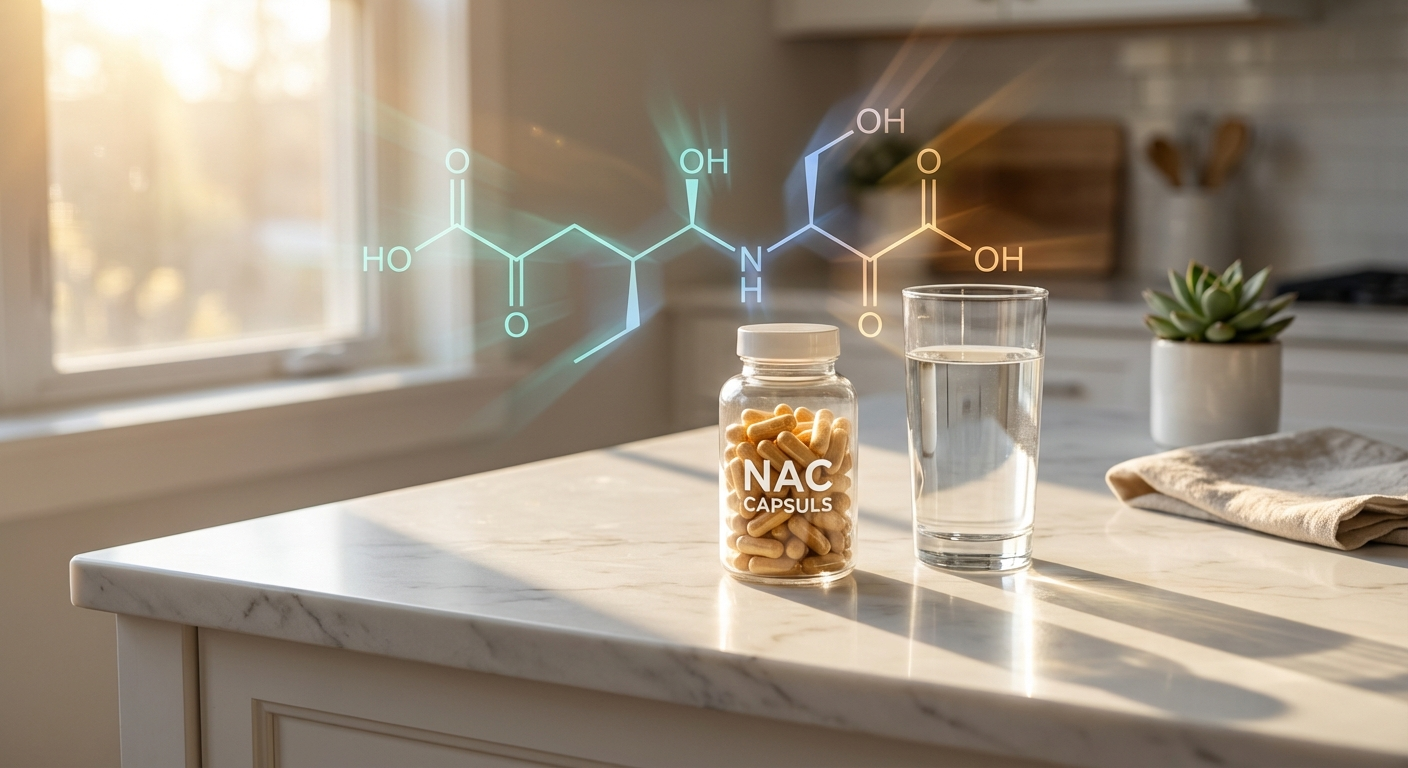
What Is NAC and Why Does It Deserve a Morning Spot?
Most people have never heard of N-acetylcysteine (NAC) — and that's a shame. This humble amino acid is one of the most extensively studied compounds in modern medicine, used in hospital IVs to save lives from acetaminophen overdose, and increasingly recognized as a cornerstone supplement for brain health, detoxification, and immune resilience.
Here's the core concept: NAC is the rate-limiting precursor to glutathione — your body's so-called "master antioxidant." Glutathione sits inside every cell, protecting mitochondria, neutralizing free radicals, and keeping your detox pathways running. Without adequate cysteine (the amino acid NAC delivers), your body simply cannot produce enough glutathione to keep up with modern-day oxidative stress.
Oral glutathione supplements? Skip them. Multiple studies show oral glutathione is poorly absorbed, rapidly degraded, and largely ineffective at raising systemic levels. NAC, by contrast, is well-absorbed orally and gives your body the building blocks to produce glutathione endogenously — exactly where you need it.
Taking NAC in the morning aligns with your body's natural detox rhythms. Peak metabolic activity, highest oxidative exposure, and maximum opportunity to support glutathione synthesis before the day's stressors pile on. This is the logic behind the NAC morning protocol.
The Glutathione Connection
Your body has three primary antioxidants that protect every cell: glutathione, vitamin C, and vitamin E. Of these, glutathione is the most important — and the hardest to maintain. Stress, poor diet, pollution, alcohol, infections, and intense exercise all deplete glutathione rapidly.
Dr. Dan Gubler, a PhD scientist who breaks down NAC research in a recent video, describes glutathione as "the guardian of your mitochondria." When glutathione drops, mitochondria — the power plants of your cells — become vulnerable to damage. The cascade that follows includes inflammation, accelerated aging, cognitive decline, and metabolic dysfunction.
NAC solves this problem upstream. By providing bioavailable cysteine, NAC enables your liver and cells to synthesize glutathione on demand. The effect is foundational: you're not just taking an antioxidant — you're rebuilding the antioxidant system your body already uses to protect itself.
Research published in peer-reviewed journals shows that NAC supplementation meaningfully raises glutathione levels in populations with depleted antioxidant defenses, including older adults, people with chronic illness, and those under high physical or oxidative stress.
NAC and the Brain: Calming the Alarm System
Here's where NAC gets really interesting for morning routine optimization. Beyond its role in glutathione production, NAC acts as a glutamate modulator — and glutamate is your brain's primary excitatory neurotransmitter.
You need glutamate for memory, learning, focus, and decision-making. But too much — which happens chronically in our high-stress, low-sleep, inflammatory modern lives — and the system overheats. The result: anxiety, racing thoughts, compulsive behaviors, brain fog, and poor impulse control.
NAC helps normalize glutamate signaling by regulating the brain's cystine/glutamate antiporter. This isn't a sedative effect — NAC doesn't just calm you down. It restores balance to a system that has become dysregulated. For people dealing with obsessive thinking, anxiety, or decision paralysis, this is a fundamentally different mechanism than anything a benzodiazepine or SSRI offers.
A landmark review in Neuroscience & Biobehavioral Reviews found favorable evidence for NAC in multiple psychiatric and neurological conditions, including autism, Alzheimer's disease, cocaine and cannabis addiction, bipolar disorder, depression, OCD, schizophrenia, and trichotillomania. The common thread: glutamate dysregulation and oxidative stress.
For morning specifically, NAC can reduce the "alarm system" hyperactivity that many people experience as soon as they wake up — the racing mind, the compulsive phone-checking, the inability to ease into the day. Taking NAC first thing, on an empty stomach, gives your brain's glutamate system a reset before the morning's demands begin.
Immune Defense: Not Just an Antioxidant
The immune data on NAC is striking. In a 6-month study, only 25% of people taking NAC contracted the flu, compared to 79% of the placebo group. That's a 54-point difference — remarkable for any intervention, let alone a single supplement.
The mechanism is twofold. First, glutathione is critical for the proper function of natural killer (NK) cells — your immune system's Navy SEALs that patrol the bloodstream hunting pathogens, infected cells, and even early cancer cells. Second, NAC's mucolytic properties help maintain clear respiratory passages, reducing the severity and duration of upper respiratory infections.
NAC also supports immune function through its anti-inflammatory effects. Chronic inflammation — driven by oxidative stress — suppresses immune vigilance. By reducing inflammation at the cellular level, NAC helps your immune system stay alert and responsive rather than exhausted and dysregulated.
This makes NAC particularly valuable during the winter months, travel, or periods of high stress when immune function is most challenged. Building it into your morning routine gives your body a fighting chance before exposure events happen.
Metabolic and Cardiovascular Benefits
Emerging research shows NAC supports metabolic health through several pathways. Inflammation is a key driver of insulin resistance — the metabolic dysfunction that precedes type 2 diabetes. By reducing oxidative stress and inflammatory markers, NAC can improve insulin sensitivity and help stabilize blood sugar levels.
For cardiovascular health, NAC protects cholesterol from oxidation (the process that turns LDL particles into arterial plaque), improves nitric oxide function for better blood flow, and has been associated with reduced risk of contrast-induced kidney injury — clinically important for anyone undergoing imaging procedures.
These aren't peripheral benefits. Heart disease, stroke, and metabolic syndrome remain the leading causes of death in developed nations. A morning supplement with evidence across all three risk axes is worth paying attention to.
Building Your NAC Morning Protocol
Based on the research, here's how to structure NAC into your morning routine:
Timing: First thing in the morning, on an empty stomach. NAC is rapidly absorbed (peak plasma concentration in 1–2 hours), and taking it before food maximizes absorption and gives your glutathione system the earliest possible support for the day ahead. Some people split the dose — 600 mg in the morning, 600 mg in the early evening — for sustained coverage.
Dosage: 600 mg once daily is the standard for general wellness and antioxidant support. For more targeted therapeutic use (respiratory issues, fertility support, higher oxidative stress), doses up to 1,200–1,800 mg per day have been studied and shown to be well-tolerated. If you're new to NAC, start with 600 mg.
With or without food: Taking NAC on an empty stomach improves absorption but may cause mild nausea in sensitive individuals. If you experience stomach discomfort, take it with a small amount of food — effectiveness remains strong.
What to expect: Unlike stimulants, NAC works subtly and cumulatively. Most people notice improvements in mental clarity, focus stability, and mood balance within 2–4 weeks. Full glutathione restoration and anti-inflammatory effects may take 8–12 weeks to fully manifest.
Important cautions: NAC can interact with certain psychiatric medications (particularly clozapine, risperidone, and some antidepressants) — consult your doctor if you're on psychotropic drugs. People with bleeding disorders or on anticoagulant therapy should also use caution. NAC is generally well-tolerated; the most common side effect is mild gastrointestinal discomfort at higher doses.

NAC (N-Acetylcysteine) 600mg Capsules
Pharmaceutical-grade NAC capsules, 600mg per capsule. The standard clinically studied dose in a single capsule. This is the most cost-effective way to run your NAC morning protocol.
View Price & DetailsThe Bottom Line
NAC isn't sexy. It doesn't come in a pre-workout pump or a vivid green powder. But what it lacks in marketing appeal, it more than makes up for in scientific depth. A single amino acid that rebuilds your master antioxidant, calms your brain's alarm system, strengthens your immune defenses, and supports metabolic and cardiovascular health — all for pennies per day.
The morning timing is strategic: your body faces its greatest oxidative challenge when metabolism kicks into gear each day. Supporting glutathione synthesis early gives your cells the best possible protection before stressors accumulate. Pair it with a quality multivitamin, adequate sleep, and movement, and you've got a morning protocol with real biochemical depth.
If you've been searching for the next optimization layer in your morning routine — past the basics of hydration, light exposure, and movement — NAC is where the science points next.
This post contains affiliate links. If you purchase through our links, we may earn a small commission at no extra cost to you.
Watch the Full Breakdown
Dr. Dan Gubler breaks down the molecular science of NAC — glutathione, glutamate modulation, and what the research actually shows.