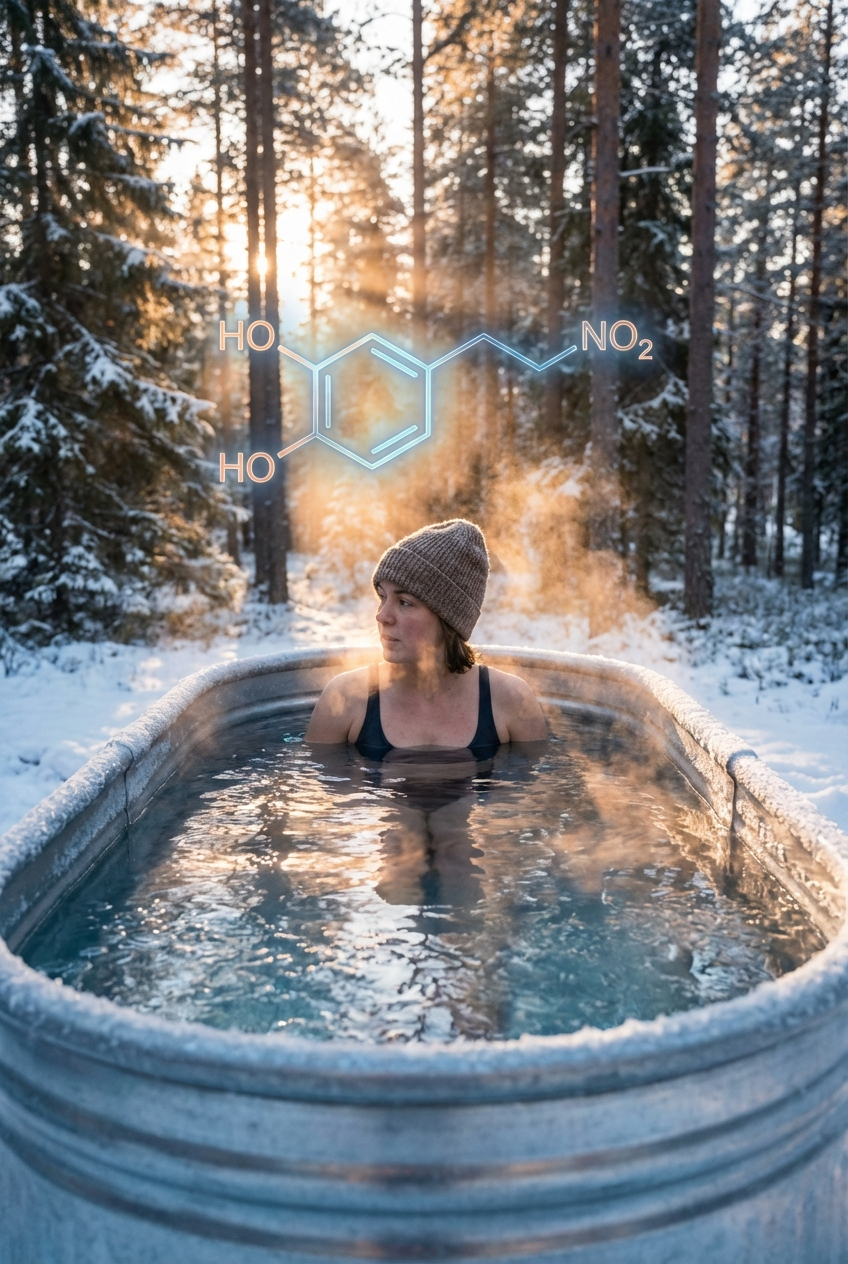
Most people run from the cold. They crank up the heating, layer up, and curse every icy gust of wind. But what if exposing yourself to cold — just a few minutes, a few times a week — could rewire your metabolism, sharpen your focus, lift your mood, and make you measurably healthier?
That's not wellness influencer hype. That's what a growing body of peer-reviewed research is showing. And the most compelling data comes from one Danish scientist who studied winter swimmers in minus degrees Celsius water and found something striking: the people who immersed themselves in cold water for just 11 minutes a week had better insulin sensitivity, faster glucose clearance, and more active brown fat than sedentary control groups.
Her name is Dr. Susanna Søberg, and her research is reshaping how we think about temperature as a health tool. Let's dig into the actual science of morning cold plunge therapy — what happens in your body, what the research proves, and how to build a safe, effective practice.
What Actually Happens to Your Body When You Plunge Into Cold Water
When you step into cold water — whether it's a dedicated plunge tub, an ice bath, or even a very cold shower — your body responds almost instantly. Within seconds, your blood vessels constrict (vasoconstriction), your heart rate spikes, and your breathing deepens involuntarily. Your brain registers the shock and floods your system with a cascade of neurotransmitters.
This is called the cold shock response, and it's one of the most potent acute physiological stressors you can voluntarily trigger. Dr. Susanna Søberg describes it this way in her research with ZOE: "Immersing yourself into cold water will mean that you will put a very big stressor on your body, sending a rapid signal to your brain that now you are in danger."
But here's the thing — that acute stress, done regularly and in controlled doses, is exactly what makes you more resilient. Think of it like exercise: you stress your muscles, and they adapt and grow. You stress your nervous system with cold, and it adapts too.
Dopamine Spike: The Natural High That Lasts for Hours
One of the most remarkable findings from recent cold water research is what happens to your dopamine levels. A 2025 study from Stanford found that dopamine levels can increase up to 250% after just 2 minutes of cold water immersion — and that spike doesn't crash like it does with sugar or caffeine. It sustains.
Dopamine is your brain's drive and motivation chemical. When it rises, you feel more alert, more focused, more energized — and crucially, you feel it for hours afterward. This is why many cold plunge enthusiasts report that they don't need their morning coffee after a plunge. The cold does the job more cleanly.
Research from the ZOE cohort also shows that cold water immersion triggers norepinephrine (noradrenaline) alongside dopamine. Norepinephrine is your adrenaline cousin — it sharpens attention and increases mental clarity. Together, these two chemicals give you a natural, sustained energy boost that synthetic stimulants can't replicate.
Brown Fat: Your Body's Built-In Calorie Burner
Your body carries two types of fat. White fat stores energy. Brown fat — and its cousin beige fat — burns energy to produce heat. Cold water activates brown fat because your body needs to generate warmth to survive the temperature shock.
In Dr. Søberg's winter swimmer studies published in Cell Reports Medicine (2021), she found that the adapted swimmers had faster activation of brown fat and higher overall brown fat activity compared to non-swimmers. When brown fat is activated, it burns glucose and fatty acids to generate heat — meaning you're literally burning more calories while you warm up after a plunge.
Harvard researchers have also shown that sleeping in cooler rooms (around 19°C / 66°F) increases insulin sensitivity and brown fat activity. Cold exposure, whether at night or in the morning, appears to be a legitimate metabolic lever.
Insulin Sensitivity: The 11-Minute-a-Week Breakthrough
This is where Søberg's research gets genuinely exciting. In her study, winter swimmers who did just 11 minutes of cold water immersion per week — spread across 2–3 sessions — showed measurably better insulin sensitivity and faster glucose clearance from their blood.
The test was straightforward: researchers gave participants a glass of sugar water on an empty stomach and tracked how quickly insulin and glucose levels normalized. The winter swimmers cleared glucose significantly faster than the control group. That's a real-world marker of metabolic health — and it's something that deteriorates with age, obesity, and sedentary living.
Søberg calls this the Søberg Principle: you don't need long, brutal cold exposures to get benefits. Short, consistent exposures a few times per week are enough to activate the physiological pathways that matter. More is not better — intentional is better.
The Mental Health Connection
Beyond metabolism and physical performance, cold water immersion shows real promise for mental health. Pilot studies have found that people struggling with anxiety and depression reported measurable mood improvements after incorporating regular cold exposure into their routines.
The mechanism ties back to the dopamine and norepinephrine surge, but also to something more fundamental: cold water forces you into the present moment. There is no room for overthinking when your body is focused on breathing through a 30-second cold shock. That mindfulness-by-necessity appears to train your nervous system's ability to stay calm under discomfort — a skill that transfers into daily life.
Research from Scandinavia also suggests that regular winter swimmers report fewer sick days and better overall mood, though the immune system claims require more controlled study to confirm definitively.
The Søberg Protocol: How to Start Safely
Dr. Søberg's research gives us a practical framework for getting started. The key principles:
- Start with cold showers: Turn your shower temperature down to cold for the last 30 seconds. Do this for 2 weeks before progressing.
- Short dips only: You don't need to suffer. 2–3 minutes is sufficient to activate the cold shock response and trigger the beneficial pathways.
- 2–3 sessions per week: That's 4–9 minutes of total cold exposure per week. You don't need to do it every single day.
- Listen to your breathing: The cold shock response includes an involuntary gasp and faster breathing. Control your breath before you enter, and keep it steady once you're in.
If you're serious about building a cold plunge practice and have access to a cold tub or a very cold natural body of water, you can work up to 3–5 minute sessions. But never push to the point of shivering uncontrollably or losing your breath — that defeats the purpose of the controlled stress response.

Steel Cold Plunge Tub (Outdoor Rated)
A durable, outdoor-rated steel plunge tub that holds ice water at ambient temperatures. Built for daily cold immersion practice — no plumbing required. If you're ready to move beyond cold showers, this is the most practical entry point.
View Price & DetailsWho Should Be Careful (Or Skip It)
Cold water immersion isn't for everyone, and the cardiovascular risks deserve respect. When you plunge into cold water, your blood vessels constrict and your blood pressure rises rapidly. For healthy individuals, this is a manageable stress. But if you have:
- Uncontrolled high blood pressure
- A history of heart disease or arrhythmias
- Circulation problems
- Raynaud's phenomenon or extreme cold sensitivity
...then you should consult your doctor before beginning a cold plunge practice. Start with cold showers at minimum, and get medical clearance before progressing to full immersion.
The Verdict: Is Cold Plunge Worth It?
The science is more solid than the wellness industry wants you to believe — and less miraculous than the influencers claim. What the research actually shows is:
- Real, measurable improvements in insulin sensitivity and glucose metabolism (winter swimmer studies)
- Sustained dopamine and norepinephrine elevation — a genuine mood and focus advantage for hours
- Brown fat activation and increased metabolic rate during rewarming
- Mental resilience benefits through deliberate cold exposure
The Søberg research is particularly compelling because the protocol is so accessible: 11 minutes per week of cold water immersion, divided across 2–3 sessions, was enough to move the needle on metabolic health markers in controlled studies.
That is not a huge time investment. And unlike many wellness interventions that require expensive supplements or equipment, cold water is universally available. You can start in your shower today.
If you've been looking for a free, scientifically-backed way to sharpen your morning focus, support your metabolism, and build mental resilience — the cold might be exactly what you need.
This post contains affiliate links. If you purchase through our links, we may earn a small commission at no extra cost to you.