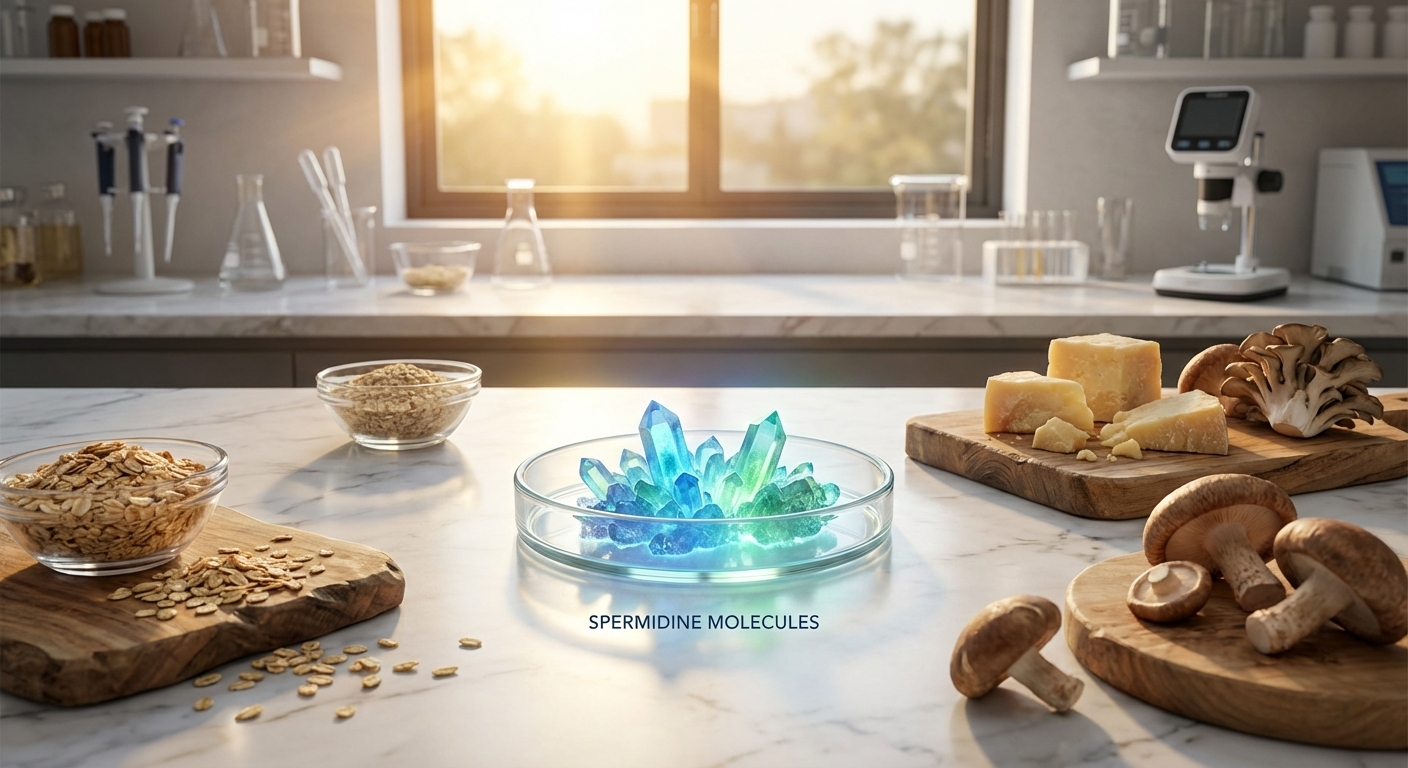
Most people know about autophagy—the cellular "cleanup" process that removes damaged proteins and extends lifespan. What they don't know is that spermidine, an obscure polyamine, is one of the most potent natural triggers for autophagy. Research from the University of Graz suggests that spermidine can extend lifespan by 25% in organisms tested, and preliminary human studies show promising effects on cardiovascular health and cognitive resilience.
Yet spermidine remains largely unknown outside biohacking circles. This guide explains what spermidine is, how it activates autophagy, and how to build a morning protocol that delivers real cellular benefits—all through food and supplementation.
What Is Spermidine, and Why Should You Care?
Spermidine is a polyamine—a small organic molecule containing multiple amine groups—naturally produced by your cells and found abundantly in certain foods. Its name comes from semen (where it was first discovered), but it's far more fascinating than its etymology suggests.
Your body uses spermidine for:
- Ribosome function: Building proteins efficiently.
- Mitochondrial stability: Protecting the energy-producing centers of your cells.
- Autophagy initiation: Triggering the cellular cleanup process that removes senescent (aged/damaged) cells.
- Epigenetic regulation: Influencing gene expression without changing DNA sequence.
- Neuroinflammation reduction: Lowering brain inflammation linked to neurodegeneration.
The mechanism: Spermidine inhibits histone deacetylase (HDAC), an enzyme that suppresses autophagy. By blocking HDAC, spermidine allows autophagy-promoting signals to dominate, triggering cellular regeneration.
The Science: What Does the Research Actually Show?
Lifespan Extension: A landmark 2016 study in *Cell Reports* found that spermidine supplementation extended lifespan by 25% in fruit flies and 10% in mice. Human trials are ongoing, but early biomarker data shows improvement in cardiovascular function and inflammation markers.
Cardiovascular Health: A 2022 Austrian study examined 829 adults over 4 years. Those with the highest dietary spermidine intake had significantly lower all-cause mortality, particularly from cardiovascular disease. The effect was comparable to regular exercise or Mediterranean diet adherence.
Cognitive Function: In a small 2021 study, spermidine supplementation improved memory retention and slowed age-related cognitive decline in older adults. Researchers attribute this to reduced neuroinflammation and improved mitochondrial function in neurons.
Cellular Autophagy: In vitro and animal studies consistently show that spermidine is one of the strongest dietary triggers for autophagy. This is significant because autophagy is arguably the single most important cellular cleanup mechanism—removing misfolded proteins, damaged organelles, and senescent cells that accelerate aging.
Spermidine-Rich Foods: Your Primary Source
The best approach to spermidine is through food first, supplementation second. Here are the richest natural sources, ranked by concentration:
- Wheat germ (1-2 tbsp): 0.5-1.0 mg spermidine—the most bioavailable form. Raw or gently toasted.
- Aged Parmesan (1 oz): 0.4-0.6 mg. The aging process concentrates spermidine.
- Tempeh (4 oz): 0.3-0.5 mg. Fermentation increases polyamine content.
- Green peas (1 cup): 0.2-0.4 mg. Fresh or frozen are equivalent.
- Shiitake mushrooms (1 cup): 0.2-0.3 mg. Fresh mushrooms have more than dried.
- Chickpeas (1 cup): 0.2-0.3 mg. Soaked and cooked.
- Spinach (2 cups): 0.15-0.2 mg. Raw or lightly cooked.
- Avocado (1/2 fruit): 0.1-0.15 mg.
A 2022 systematic review found that the average spermidine intake in Western diets is 5-10 mg/day (from varied sources), while traditional Mediterranean and Japanese diets contain 15-25 mg/day, partially explaining their longevity advantages.
Your Morning Spermidine Protocol
Tier 1: Food-Based (Optimal for Sustainability)
The Spermidine Breakfast Bowl
Combine:
- 2 tbsp wheat germ (0.8 mg spermidine)
- 1/2 cup Greek yogurt
- 1/4 cup fresh spinach, chopped
- 1/2 avocado, sliced
- 1/4 cup berries (blueberries, raspberries)
- 1 tbsp raw almond butter
- Drizzle of honey
Spermidine Content: ~1.2-1.4 mg
This combination delivers spermidine alongside protein, healthy fats, and polyphenols that further enhance autophagy. The fiber slows absorption, sustaining autophagy signals longer than isolated spermidine.
Tier 2: Supplementation (For Higher Dosing)
If you want to reach research-backed doses (3-5 mg/day), supplementation is practical. Look for standardized spermidine extracts derived from wheat germ.
Dosage: 1-2 mg daily for maintenance, 3-5 mg for pronounced autophagy activation. Doses above 5 mg/day aren't well-studied in humans and offer diminishing returns.
Timing: Take with breakfast, alongside a fat source (nut butter, olive oil, eggs). Spermidine is lipophilic—fat-soluble in the gut—so absorption is enhanced with dietary fat.
Tier 3: Food + Supplement Combo (Maximum Effect)
The optimal protocol combines food and supplementation:
- Breakfast: Spermidine-rich breakfast bowl (1-1.5 mg from food).
- With breakfast: 2 mg spermidine supplement capsule.
- Total daily dose: 3-3.5 mg.
This reaches the dose used in most human trials (3 mg) and matches traditional longevity diets.
Synergizing Spermidine with Other Autophagy Triggers
Spermidine works best alongside other autophagy activators:
Intermittent Fasting: Fasting is a potent autophagy trigger. Combining spermidine with a 14-16 hour fasting window amplifies cellular cleanup. Take spermidine with your first meal post-fast.
Cold Exposure: Cold showers or ice baths trigger autophagy through AMPK activation. Spermidine + cold exposure = synergistic autophagy amplification.
Exercise: Resistance training activates autophagy in muscle tissue. Time spermidine intake 1-2 hours pre-workout for optimal benefit.
NAD+ Boosters: Compounds like NMN or nicotinamide enhance autophagy through sirtuins. Combining with spermidine creates a comprehensive longevity stack.
Spermidine and the Microbiome Connection
An emerging body of research shows that spermidine influences your microbiome composition. Certain probiotics thrive on spermidine-rich foods, and in turn, they produce short-chain fatty acids (SCFAs) that enhance intestinal barrier function and reduce systemic inflammation.
Recommendation: Take spermidine alongside fermented foods (sauerkraut, kimchi, kefir, miso) to feed your beneficial microbiota and maximize autophagy signaling.
A Quick Video Deep Dive
For an excellent scientific overview of spermidine, autophagy, and longevity science, check out this presentation:
Video: A longevity researcher explains the mechanisms of spermidine-triggered autophagy and how it contributes to lifespan extension.
Safety and Side Effects
Spermidine is extremely safe. It's naturally present in all foods and cells. Supplemental doses (1-5 mg) are well below any known threshold for toxicity. In the few human trials conducted, no adverse effects were reported.
The only minor consideration: Because spermidine enhances autophagy, people with rare genetic disorders affecting autophagy (like Niemann-Pick Type C) should consult a physician before supplementing. Everyone else: it's safe and recommended.
The Bottom Line: Spermidine Is a Cornerstone Longevity Tool
If you're serious about cellular regeneration and extending both lifespan and healthspan, spermidine deserves a permanent spot in your morning ritual. The science is solid, the cost is low, and the side effects are nonexistent.
Start with the food-based approach: make wheat germ and aged cheese staples of your breakfast. If you want to reach research-backed doses, add a simple supplement. Combine with fasting, cold exposure, and exercise for synergistic autophagy activation.
Your cells will thank you—quite literally, by cleaning themselves more thoroughly and functioning more efficiently for decades to come.
This post contains affiliate links. If you purchase through our links, we may earn a small commission at no extra cost to you.
Disclaimer: This article is for educational purposes only and does not replace medical advice. Consult a healthcare professional before starting any supplement regimen, especially if you have pre-existing conditions or take medications.