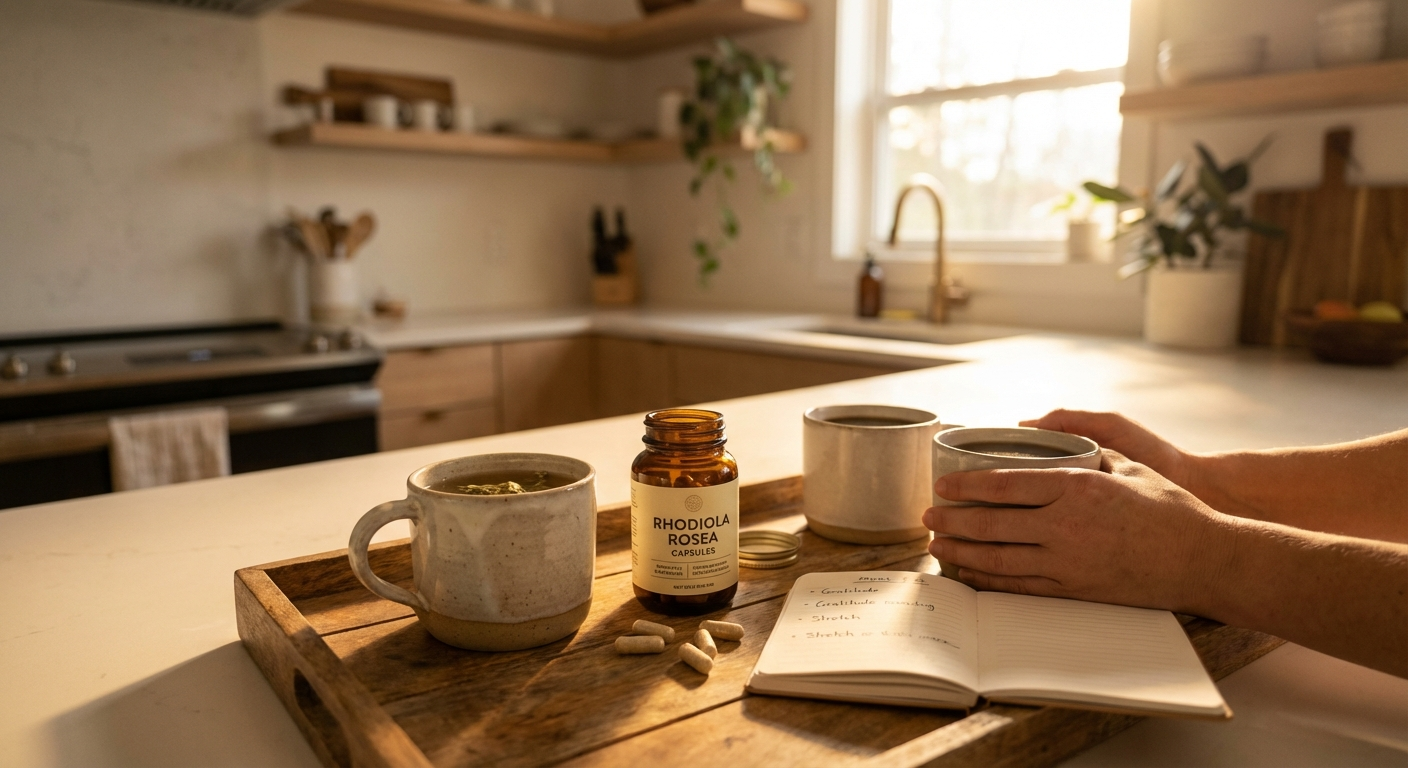
If your mornings feel like a battle between mental fog and rising stress, rhodiola rosea is worth a closer look. Unlike pure stimulants, rhodiola is usually positioned as an adaptogen: a compound that may help your body handle stressors more effectively over time. That sounds vague, so let’s make it practical.
This guide focuses on one question: how do you use rhodiola in a real morning routine so you can actually tell whether it helps? We’ll cover what the research says, when to take it, what dose ranges are commonly studied, and who should skip it or check with a clinician first.
What Rhodiola Is (and What It Is Not)
Rhodiola rosea is a flowering plant traditionally used in parts of Europe and Asia for fatigue and resilience in harsh conditions. Modern supplement use usually targets stress management, concentration, and reduced perceived fatigue.
What rhodiola is not: a replacement for sleep, a cure for burnout, or a guaranteed productivity hack. The best use case is as a support tool layered on top of consistent sleep timing, decent protein intake, and a stable caffeine strategy.
Three Science-Backed Claims You Can Actually Use
1) Rhodiola may reduce fatigue and improve mental performance under stress. A number of controlled trials suggest rhodiola can improve fatigue-related outcomes and some cognitive performance measures in stressful conditions, especially when people are already run down.
2) Rhodiola may improve stress symptoms and mood in mild-to-moderate stress states. Clinical studies have reported improvements in stress scales, burnout-related symptoms, and perceived well-being in participants using standardized rhodiola extracts.
3) Rhodiola may support physical performance and endurance under certain conditions. Some studies show modest benefits in exercise tolerance and exertion perception, though results vary based on dose, extract standardization, and participant type.
Bottom line: the data is not perfect, but it’s stronger than most generic “morning wellness” trends. Standardized extracts and consistent use matter more than hype.
Morning Timing: Why It Usually Makes Sense
Rhodiola is often taken earlier in the day because many users describe it as gently activating rather than sedating. If your goal is better morning focus and less stress reactivity, breakfast or the first half of the morning is a reasonable default.
- Take in the morning if you want support for workday stress and mental stamina.
- Avoid late evening use if you’re sensitive and it affects sleep onset.
- Keep caffeine stable while testing rhodiola so your results are interpretable.
How Much to Take: Practical Dose Range
Published studies use different products and protocols, so there is no one universal dose. A practical, conservative range many adults test is 200-400 mg/day of a standardized extract (often listed by rosavin/salidroside content), usually taken in one morning dose.
A clean testing approach:
- Days 1-7: start low (for example, 200 mg with breakfast).
- Days 8-30: increase only if needed and tolerated (for example, toward 300-400 mg).
- Do not stack new supplements at the same time.
- Track outcomes daily: 10 AM energy, stress level, focus depth, afternoon crash, and sleep quality.
That protocol beats random experimentation and helps you make a real keep-or-drop decision after 30 days.
A 15-Minute Rhodiola Morning Stack (Realistic Version)
If you want something simple and repeatable:
- Minute 0-2: Hydrate (water + pinch of salt if you train early and sweat heavily).
- Minute 2-8: Eat a small protein-forward breakfast.
- Minute 8: Take rhodiola with food.
- Minute 10-15: Start your most important task before opening messages.
This routine reduces decision fatigue and gives the supplement a stable behavioral context. Supplements perform better when your environment is consistent.
Watch: Credible YouTube Breakdown
For a concise physician-led overview, this recent video is a useful primer on rhodiola’s endurance and energy angle:
Amazon Picks to Build a Simple Rhodiola Setup
You don’t need a giant supplement stack. Two or three tools are enough:
- Standardized rhodiola capsules: Browse Rhodiola Extracts
- Weekly pill organizer (consistency tool): High-Rated Weekly Organizers
- Morning habit journal (for data tracking): Habit Tracker Journals
Side Effects, Interactions, and Caution Flags
Rhodiola is generally tolerated by many healthy adults, but some users report jitteriness, headache, dry mouth, irritability, or sleep disruption (especially if taken too late or combined with high caffeine).
Check with a qualified clinician before use if you:
- take antidepressants, stimulants, or mood-related medications,
- have bipolar spectrum conditions,
- are pregnant or breastfeeding,
- have a complex endocrine or psychiatric history.
When in doubt, start lower and monitor tightly. If you feel wired, anxious, or your sleep worsens, stop and reassess.
How to Judge Results After 30 Days
Don’t evaluate on one “great” or “bad” day. Look for trend-level changes:
- More stable morning energy from wake-up to noon
- Lower stress reactivity during routine work pressure
- Better consistency in starting important tasks
- No meaningful downside in sleep quality
If these are improving, keep it. If not, move on. The goal is not to believe in supplements. The goal is to run a clean experiment and keep only what earns its spot.
Bottom Line
Rhodiola can be a useful morning tool for stress-heavy days and mental fatigue—especially when dosing is conservative and your routine is stable. Use a standardized extract, run a 30-day test, and let data—not hype—decide whether it stays in your stack.
Quick FAQ
Can I take rhodiola with coffee? Usually yes, but keep caffeine dose steady while testing. If you feel too wired, reduce caffeine first before blaming rhodiola.
Should I take it fasted? Some people tolerate fasted dosing, but many do better with a small meal to reduce jitteriness and GI discomfort.
How quickly does it work? A subset of users notice effects within days, especially for perceived fatigue, but clearer pattern-level changes often take 2-4 weeks of consistent use.
Do I need to cycle it? Not everyone cycles, but a simple approach is 6-12 weeks on, then a short break to reassess baseline and avoid blindly continuing ineffective supplementation.
Common Mistakes That Make Rhodiola “Fail”
- Changing five variables at once: new supplement, new caffeine dose, new sleep schedule, and new workout all in one week makes results impossible to interpret.
- Ignoring extract quality: unlabeled or non-standardized products can produce inconsistent outcomes even when the label looks impressive.
- Taking it too late: for sensitive users, afternoon dosing can compromise sleep and erase any daytime benefit.
- Expecting stimulant-level effects: rhodiola is often subtle; think steadier stress handling, not an instant “rush.”
If you avoid those four mistakes, your 30-day test will be far more useful—and you’ll know whether rhodiola deserves a permanent spot in your morning routine.
References
- Panossian A, Wikman G. Effects of adaptogens on the central nervous system and the molecular mechanisms associated with their stress—protective activity. Pharmaceuticals. 2010.
- Spasov AA, et al. A double-blind, placebo-controlled pilot study of the stimulating and adaptogenic effect of Rhodiola rosea SHR-5 extract on fatigue of students caused by stress during an examination period. Phytomedicine. 2000.
- Darbinyan V, et al. Rhodiola rosea in stress induced fatigue—A double blind cross-over study. Phytomedicine. 2000.
- Olsson EMG, et al. A randomised, double-blind, placebo-controlled, parallel-group study of SHR-5 extract in the treatment of subjects with stress-related fatigue. Planta Medica. 2009.
- Amsterdam JD, Panossian AG. Rhodiola rosea as a putative botanical antidepressant. Phytomedicine. 2016.
- YouTube source: Dr. Eric Berg DC, “Boost Your Workout Stamina (Endurance) with RHODIOLA” (2 years ago, 100K+ views): https://www.youtube.com/watch?v=FDgXAW-53oQ
This post contains affiliate links. If you purchase through our links, we may earn a small commission at no extra cost to you.