Gut health gets overhyped online, but the core idea is still true: your microbiome influences digestion, metabolism, immune signaling, and even mood through the gut-brain axis. The best move is not a complicated cleanse. It’s a repeatable morning ritual that feeds beneficial microbes, supports bowel regularity, and reduces inflammatory load over time.
In this guide, we’ll build a 20-minute morning gut protocol using interventions with actual human data: fermented foods, prebiotic fiber, and targeted food choices that improve stool regularity and microbial diversity. No detox tea. No extreme fasting rules. Just useful habits.
Why morning is a smart lever for gut health
Morning is behaviorally powerful because it’s consistent. If a habit happens before work, notifications, and decision fatigue, adherence rises. That matters because gut improvements are cumulative. Microbiome changes are driven by repeated food exposures, not one perfect meal.
There’s also physiology on your side. The gastrocolic reflex is strongest after waking and after your first intake of food or fluid. That’s why many people have their most reliable bowel movement window in the first few hours of the day. Building your ritual around this natural pattern can reduce constipation and “random” bathroom timing.
The 20-minute morning gut protocol
Use this sequence for 2-4 weeks before you judge results:
- Minute 0-3: Drink a glass of water (room temp or warm).
- Minute 3-10: Eat a fermented + fiber starter (examples below).
- Minute 10-20: Light movement while your gut wakes up (kitchen cleanup, easy walk around home, mobility).
The food composition is the key. Your first intake should combine live cultures (fermented dairy or non-dairy alternatives with active cultures) and prebiotic substrate (fiber-rich foods microbes can ferment into short-chain fatty acids).
What the science says (and why this protocol works)
1) Fermented foods can increase microbiome diversity and reduce inflammatory markers. In a Stanford-led human trial, adults on a fermented-food-rich diet showed increased microbiome diversity and decreased multiple inflammation markers over 10 weeks. That combination—more diverse microbes and lower inflammatory signaling—is exactly what most “gut reset” plans promise but rarely deliver.
2) Prebiotic fiber supports short-chain fatty acids (SCFAs), which help gut barrier and metabolic health. Microbes ferment fibers into SCFAs like butyrate, acetate, and propionate. These compounds support intestinal barrier integrity, immune balance, and glucose metabolism. In practical terms: better bowel consistency, fewer energy crashes, and improved satiety signaling for many people.
3) Kiwi has strong data for bowel regularity. Multiple clinical trials show green kiwifruit can improve stool frequency and comfort in people with constipation or IBS-C symptoms. One to two kiwis in the morning is an easy add-on with a low friction cost.
4) Your gut and brain are tightly connected. Stress can alter gut motility and symptoms, while gut-derived signals can influence mood and cognition. A calmer, structured morning routine often helps both digestive predictability and perceived stress, creating a positive feedback loop.
Build your breakfast: 3 plug-and-play options
You don’t need gourmet prep. Use one of these:
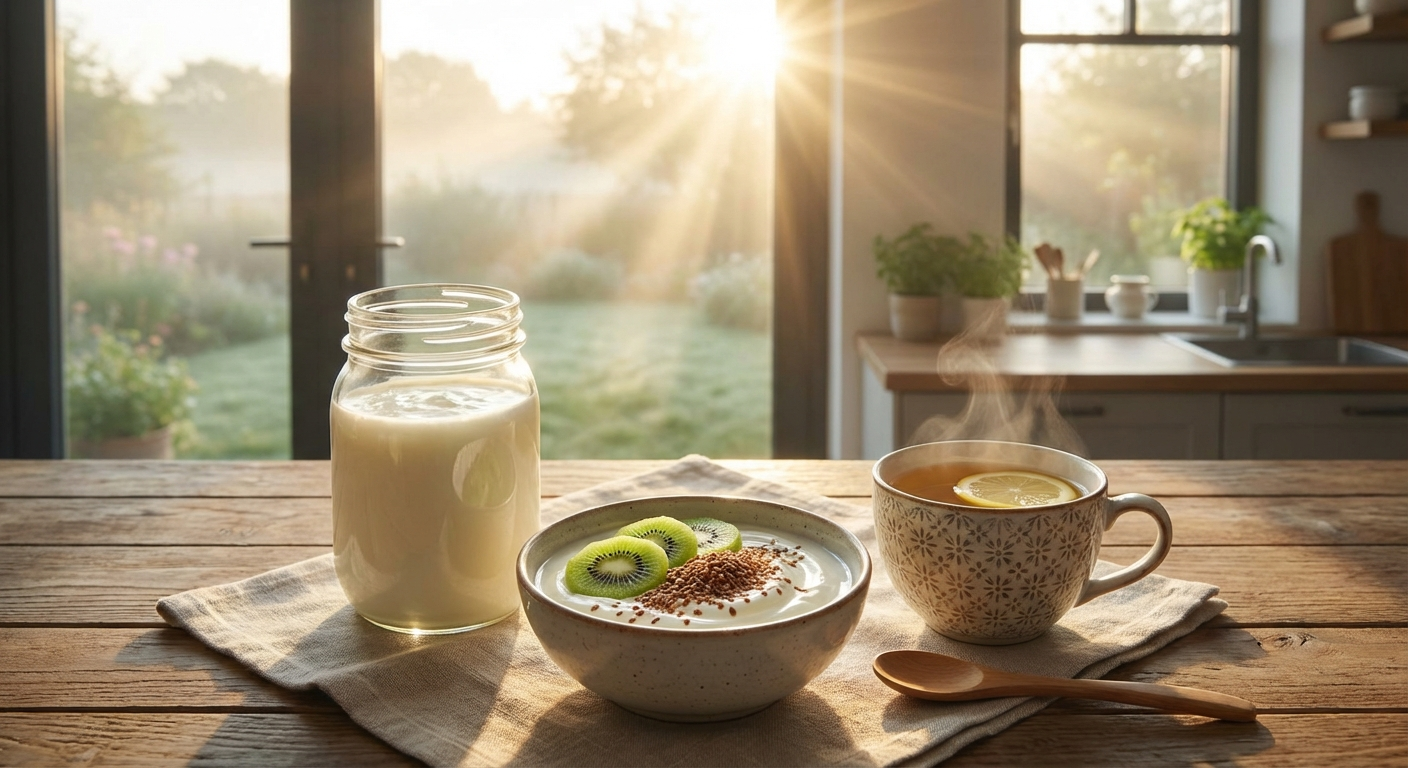
- Option A (5 minutes): Plain Greek yogurt + ground flaxseed + kiwi slices + cinnamon.
- Option B (2 minutes): Kefir smoothie with frozen berries + chia + oats.
- Option C (savory): Eggs + side of kimchi/sauerkraut + fruit.
Keep sugar low and protein moderate. High-sugar breakfasts can worsen post-meal crashes and appetite instability, which indirectly disrupts consistency in healthy gut behaviors later in the day.
Watch this evidence-based breakdown
If you want a deeper clinician-level explainer, this talk from Dr. Will Bulsiewicz is a strong companion resource:
Recommended tools that make the ritual easier
You can do this with regular groceries, but these products can reduce friction if you’re busy:
Culturelle Daily Probiotic Capsules
One of the most widely used probiotic options with strong customer reviews. Useful as a travel/day-to-day consistency backup (not a replacement for fiber-rich food).
View on AmazonOrganic Ground Flaxseed (Milled)
A simple prebiotic fiber add-on for yogurt, kefir, or oatmeal. Easy way to increase fermentable substrate for beneficial gut bacteria.
View on AmazonGlass Fermentation Jar Kit
If you want to DIY sauerkraut or fermented veggies at home, a jar kit lowers cost and keeps your fermented-food habit consistent.
View on AmazonHow to personalize without losing the science
Most people fail because they overcomplicate. Keep these rules:
- Rule 1: Keep one fermented food daily (kefir, yogurt with live cultures, kimchi, sauerkraut).
- Rule 2: Add one prebiotic fiber source daily (flax, chia, oats, legumes, kiwi, onion/garlic in later meals).
- Rule 3: Track one outcome metric only: bowel regularity, bloating score, or afternoon energy.
If symptoms worsen (pain, blood in stool, severe bloating, unexplained weight loss), stop self-experimenting and talk to your clinician. Gut symptoms can signal conditions that need medical diagnosis.
What results to expect in 2-4 weeks
You may notice improvements in this order:
- More predictable morning bowel movements
- Less post-breakfast heaviness/bloating
- Steadier late-morning energy and fewer cravings
- Better tolerance to high-fiber meals later in the day
The key is consistency, not perfection. A “B+ ritual” repeated daily beats a perfect protocol you only do on Mondays.
Common mistakes that quietly sabotage gut progress
Mistake 1: Overloading fiber too fast. Going from very low fiber to huge doses overnight often increases gas and discomfort. Ramp gradually over 7-10 days and increase water with fiber additions.
Mistake 2: Treating probiotics like magic pills. A capsule can help in specific contexts, but your daily food pattern does most of the heavy lifting. If your diet is low in diverse fibers, probiotic benefits are often limited or inconsistent.
Mistake 3: Ignoring total lifestyle load. Poor sleep, high stress, and chaotic meal timing can overwhelm even a good gut protocol. Keep bedtime consistent and avoid late-night ultra-processed snacks if you want better morning digestion.
Mistake 4: Quitting too early. Some gut improvements are visible in days, but microbiome-related benefits usually need steady repetition. Commit to a 14-day minimum before changing your plan.
Research notes and citations
- Wastyk HC, et al. Gut-microbiota-targeted diets modulate human immune status. Cell. 2021.
- Rinninella E, et al. What is the Healthy Gut Microbiota Composition? A Changing Ecosystem across Age, Environment, Diet, and Diseases. Microorganisms. 2019.
- Dimidi E, et al. Mechanisms of action of probiotics and the gastrointestinal microbiota on gut motility and constipation. Adv Nutr. 2017.
- Bayer SB, et al. Kiwifruit and constipation: A randomized crossover trial. Am J Gastroenterol. 2022.
- Carabotti M, et al. The gut-brain axis: interactions between enteric microbiota, central and enteric nervous systems. Ann Gastroenterol. 2015.
Bottom line: if you want better mornings, feed your microbiome first. A small, science-backed gut ritual is one of the highest ROI changes you can make this month.
This post contains affiliate links. If you purchase through our links, we may earn a small commission at no extra cost to you.