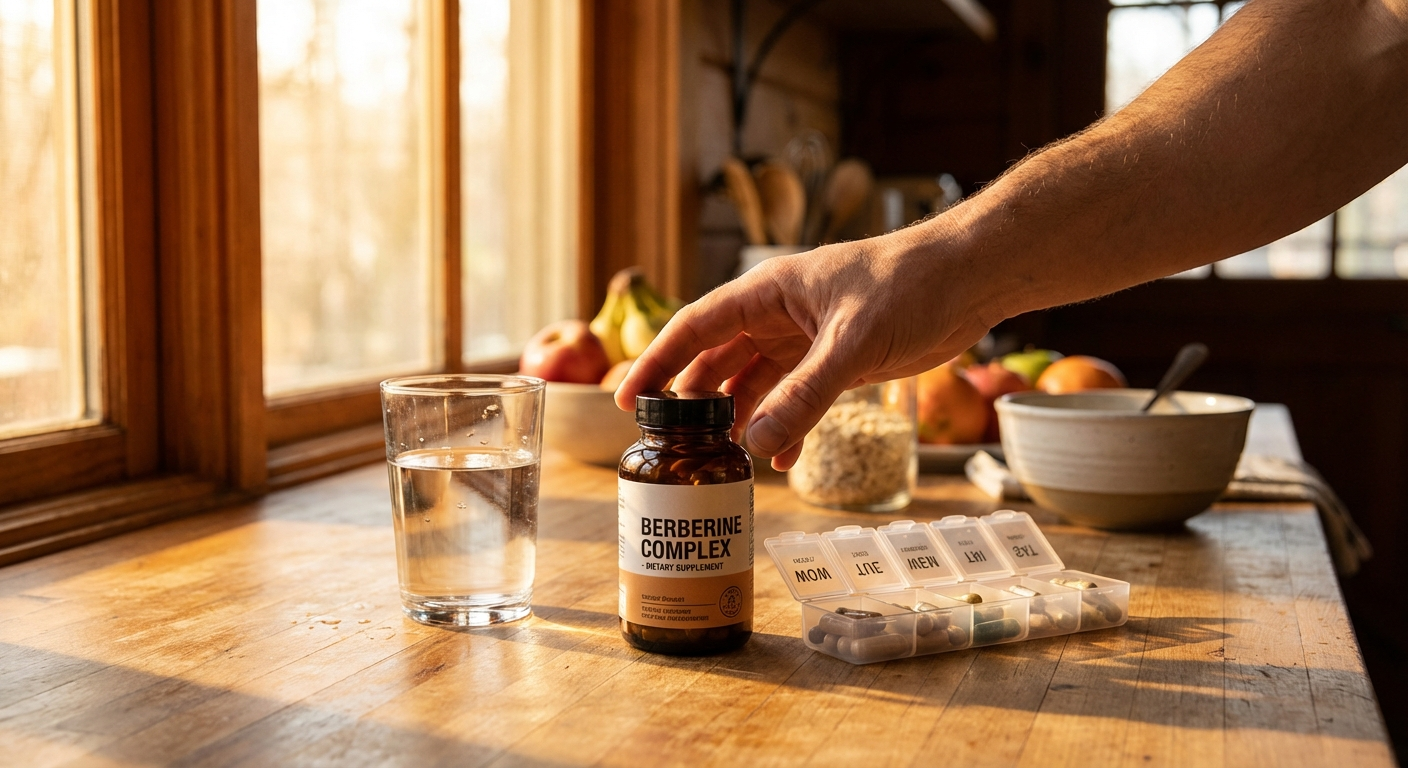
Berberine has gone from niche herbal compound to mainstream "nature's Ozempic" buzzword. That nickname is dramatic, but the underlying interest is understandable: people want better fasting glucose, fewer energy crashes, and steadier appetite through the workday. The good news is that berberine is not hype alone. The research base is now broad enough to make practical recommendations for a morning routine.
The key is execution. Most people fail with berberine for one of three reasons: inconsistent timing, taking too much too fast, or ignoring gastrointestinal tolerance. If you treat it like a protocol instead of a random capsule, outcomes tend to be better and side effects lower.
What Berberine Actually Does (Without the Hype)
Berberine is a plant alkaloid studied for glucose and lipid metabolism. Mechanistically, research suggests it activates pathways linked to insulin sensitivity and glucose uptake, including AMPK signaling. In plain language: it appears to help cells handle energy more efficiently, particularly in people with insulin resistance, prediabetes, or type 2 diabetes risk patterns.
Across systematic reviews and meta-analyses, berberine supplementation has been associated with improvements in fasting blood glucose, HbA1c, triglycerides, and LDL cholesterol in metabolic-risk populations. It is not a substitute for physician-guided care, and it is not a license to ignore sleep or nutrition. But it can be a meaningful lever inside a broader morning strategy.
Should You Take Berberine in the Morning?
For most people, morning is a strong anchor point because consistency beats perfection. Pharmacokinetic data suggest berberine has relatively low oral bioavailability and is commonly dosed in divided servings (for example, two or three smaller doses) rather than one large dose. That is why many protocols pair a capsule with breakfast and then again with lunch and/or dinner.
If you want a minimalist morning ritual, start with a single breakfast dose for 7 to 14 days. If tolerated, you can scale to a split routine. Taking it with food generally improves comfort and adherence, especially if you are prone to nausea, cramping, or loose stools.
Evidence-Based Dose Range (General Wellness Context)
In clinical trials, total daily berberine doses often land around 900 to 1,500 mg/day, typically split into 2 to 3 servings. A common real-world ramp looks like this:
- Week 1: 500 mg with breakfast.
- Week 2: 500 mg with breakfast + 500 mg with dinner.
- Week 3+ (optional): Add a lunch dose if guided and tolerated.
This "low and slow" approach is boring, but effective. It reduces drop-off from GI side effects and gives your routine time to stabilize. Bigger doses on day one are usually where people tap out.
Three Science-Backed Claims You Can Actually Use
1) Berberine can improve fasting glucose and HbA1c in metabolic-risk groups. Multiple meta-analyses report reductions in glycemic markers compared with control conditions, particularly in people with insulin resistance or type 2 diabetes features.
2) Berberine can support lipid improvements. Research has shown decreases in triglycerides and LDL cholesterol in several study populations, which is relevant for cardiometabolic risk management.
3) Timing with meals improves tolerability and consistency. While exact meal timing protocols vary across studies, splitting doses with meals is consistently used in clinical practice patterns to reduce GI discomfort and maintain adherence.
These are not miracle effects. They are moderate, useful, and most powerful when paired with protein-forward breakfast choices, daily movement, and sleep discipline.
The 10-Minute Berberine Morning Ritual
If you want this to work in real life, use a frictionless sequence:
- Minute 0: Wake, drink water.
- Minute 2: Build a protein-first breakfast (eggs + fruit, Greek yogurt + chia, or tofu scramble).
- Minute 8: Take berberine with first bites of food.
- Minute 10: 5–10 minutes of light movement (walk, chores, mobility).
Why this sequence works: hydration reduces morning fatigue noise, protein/fiber improve satiety, berberine is taken in a tolerable context, and movement supports post-meal glucose handling. You are stacking mechanisms, not relying on one capsule.
What to Track for 30 Days
Supplements are often judged by vibes. Use data instead. Track:
- Fasting glucose (if you have a meter), 2–4x/week
- 10:30 AM energy crash score (1-10)
- Afternoon cravings (1-10)
- GI tolerance (none/mild/moderate/severe)
- Waist measurement weekly (same time/day)
If metrics do not improve after 6 to 8 weeks of consistent use, that is useful information. You can reassess dose timing, food context, or whether this supplement is worth continuing.
Side Effects, Interactions, and Who Should Be Careful
Most side effects are gastrointestinal: constipation, diarrhea, bloating, or stomach upset. These are usually dose and timing dependent. Berberine can also interact with medications, including glucose-lowering drugs and other prescriptions processed through liver enzyme pathways. If you are on medication, pregnant, breastfeeding, or managing a diagnosed condition, get clinician guidance first.
Also, do not combine berberine with aggressive calorie restriction and high stimulant intake, then blame "the supplement" when your system feels off. Context matters.
Watch: Practical Berberine Dosing Walkthrough
This recent video gives a straightforward, clinician-style breakdown of dosing logic and common mistakes:
Recommended Amazon Products
If you want to build a clean morning setup, these are practical starting points:
- Thorne Berberine (search)
- NOW Foods Berberine Glucose Support (search)
- AM/PM Weekly Pill Organizer (search)
Bottom Line
Berberine can be a useful morning tool for people focused on glucose stability and metabolic health, especially when paired with food and consistent routine design. Start low, take it with breakfast, and track objective markers. Think in 30-day trends, not 3-day expectations.
If your goal is fewer crashes, better appetite control, and more stable workday energy, berberine might earn its place. Just run it like an engineer: controlled input, consistent protocol, measurable output.
Quick FAQ
Can I take berberine on an empty stomach? You can, but many people tolerate it better with food. If you get GI symptoms, move it to the first few bites of breakfast.
How long before I notice changes? Some people notice appetite or energy differences in 1 to 2 weeks, but blood markers usually need 6 to 12 weeks of consistency to show meaningful shifts.
Can I pair berberine with coffee? Usually yes, but avoid introducing both a new berberine dose and high caffeine at the same time. Change one variable first so you can identify what is helping (or hurting).
References
- Yin J, et al. Efficacy of berberine in patients with type 2 diabetes mellitus. Metabolism. 2008.
- Lan J, et al. Meta-analysis of the effect and safety of berberine in the treatment of type 2 diabetes mellitus, hyperlipemia and hypertension. J Ethnopharmacol. 2015.
- Dong H, et al. The effect of berberine on blood lipids: a systematic review and meta-analysis of randomized controlled trials. Planta Med. 2013.
- Cicero AFG, Baggioni A. Berberine and its role in chronic disease. Adv Exp Med Biol. 2016.
- Imenshahidi M, Hosseinzadeh H. Berberis vulgaris and berberine: update review. Phytother Res. 2019.
- YouTube source: Dr. Kate Lyzenga-Dean, "How to Take Berberine: Supplement for Success!" (13 days ago, 267K+ views): https://www.youtube.com/watch?v=qDZdvv0dC9E
This post contains affiliate links. If you purchase through our links, we may earn a small commission at no extra cost to you.