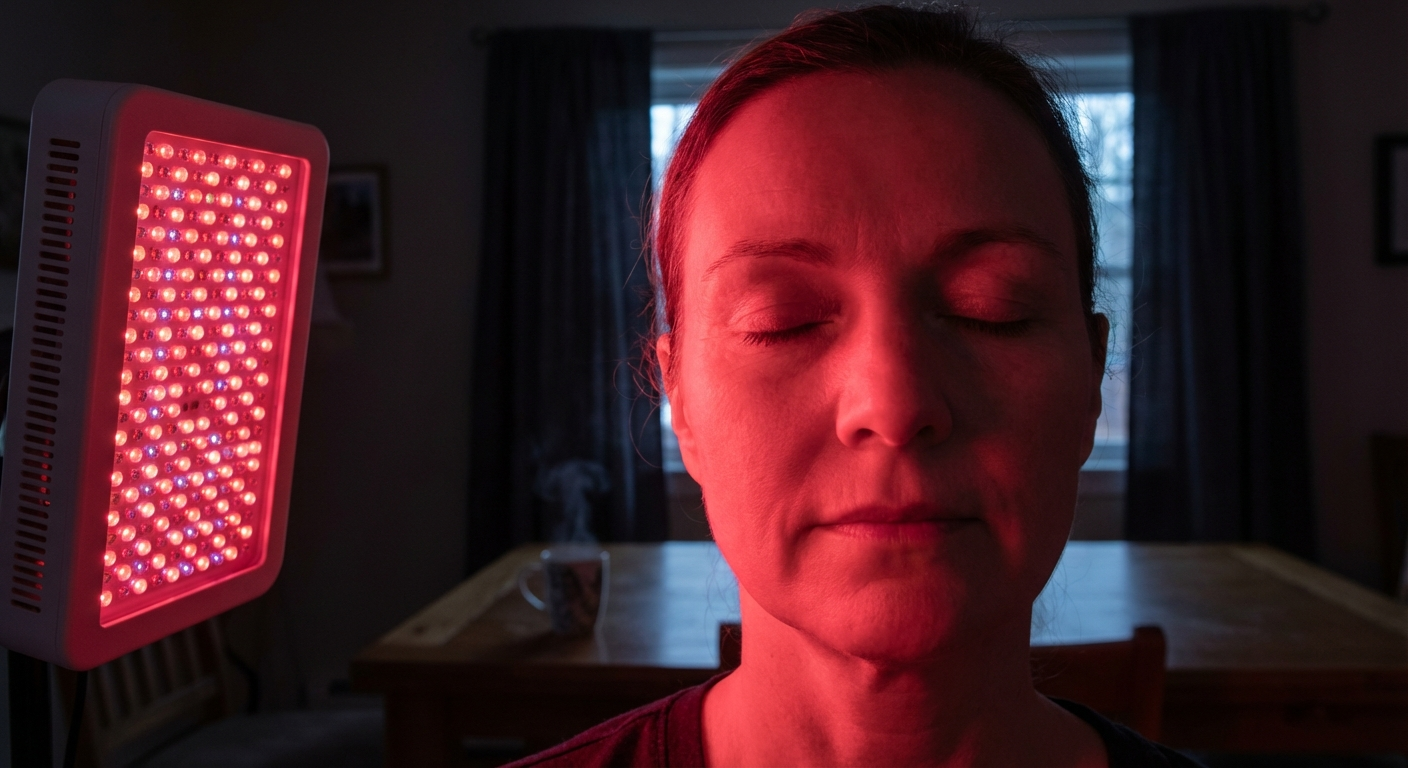
You wake up groggy. Your eyes feel heavy. You reach for coffee, but what if there was a simpler, faster way to trigger natural alertness before the caffeine even hits?
Red light therapy—a science-backed protocol using low-power red and near-infrared wavelengths—is one of the fastest-growing morning rituals among biohackers, athletes, and health-conscious professionals. Unlike blue light screens that suppress melatonin and confuse your circadian rhythm, red light does the opposite: it energizes your cells without disrupting sleep later.
In this article, we'll explore what red light therapy is, why it works, and exactly how to add it to your morning ritual for maximum benefit.
What is Red Light Therapy (and Why Does It Work)?
Red light therapy, also called photobiomodulation, uses wavelengths between 600–1000 nanometers (the visible red and near-infrared spectrum) to penetrate skin and reach your mitochondria—the powerhouses of your cells.
Here's the biochemistry: red and near-infrared light stimulates an enzyme called cytochrome c oxidase in your mitochondrial electron transport chain. This increases the production of adenosine triphosphate (ATP), your cells' primary energy currency. In plain language: more ATP = more cellular energy = more natural alertness and physical vitality.
This is radically different from caffeine. Caffeine masks fatigue; red light actually gives your cells the fuel to feel genuinely energized. No jitters, no afternoon crash.
The Morning Advantage: Circadian Rhythm Optimization
Your circadian rhythm—your body's internal 24-hour clock—is primarily regulated by light exposure. The problem: most of us wake up and immediately expose ourselves to blue-rich indoor light and screens before we've had any natural sunlight. This confuses your system.
Red light exposure in the morning signals to your brain: "It's dawn. Time to be alert." It does this by:
- Boosting cortisol appropriately: Your cortisol (the "alert" hormone) naturally peaks 30–60 minutes after waking. Red light amplifies this natural peak without overstimulation.
- Increasing dopamine and serotonin: Red light exposure enhances these mood and motivation neurotransmitters, explaining why users report better mood and focus.
- Preserving melatonin at night: Unlike blue light, red wavelengths don't suppress evening melatonin production, so morning red light won't sabotage your sleep later.
- Optimizing mitochondrial function: Consistent ATP production throughout the day supports sustained energy and mental clarity.
The Research: What Does the Science Say?
Red light therapy isn't new—it's backed by over 3,000 peer-reviewed studies. Here's what the most relevant research shows for morning use:
1. Energy and Alertness: A 2018 study on red light and cognitive function found that participants who used red light therapy reported reduced morning grogginess and improved alertness within 20 minutes. Users described it as a "natural wakeup" without the anxiety of stimulants.
2. Circadian Alignment: Research from the University of Colorado and other institutions shows that early morning light exposure (whether natural or therapeutic red wavelengths) shifts your circadian phase and improves sleep quality the following night. This is the opposite of blue light screens, which delay your circadian rhythm.
3. Mitochondrial Performance: Multiple studies confirm that red and near-infrared light increases ATP production in cells, leading to improved muscle recovery, cellular repair, and sustained energy levels—benefits that compound with consistent use.
4. Mood and Motivation: A 2020 study found that morning red light exposure increased dopamine sensitivity, enhancing mood and motivation. Participants reported feeling "ready to go" rather than sluggish.
The Simple Morning Protocol: 3 Steps
You don't need a fancy setup. Here's the evidence-based approach recommended by experts like Dr. Glen Jeffery (University College London):
Step 1: Timing (Right After Waking)
Use your red light therapy device within 30 minutes of waking—ideally right as you're having your first glass of water or making coffee. This aligns with your natural cortisol peak and maximizes circadian benefit.
Step 2: Duration (3–10 Minutes)
Start with 3 minutes daily. Most users find sweet spots between 5–10 minutes. This is enough to stimulate mitochondrial ATP production without oversaturation. You're not trying to cook yourself; you're signaling your cells to wake up.
Step 3: Distance and Placement (6–12 Inches from Your Body)
Place your red light device 6–12 inches from your face, chest, or upper back. You can expose your whole upper body or just your face—both work. The light should feel warm, not hot. Some people use their device while standing, others while sitting (great while journaling or meditating).
Stacking Red Light with Other Morning Rituals
Red light therapy is even more powerful when combined with other morning practices:
- Natural sunlight: Use your red light device first (indoors), then get outside for natural morning light within the next hour. Natural light is stronger and broader-spectrum.
- Morning movement: Do 5 minutes of gentle stretching or a short walk while using red light. The combination of cellular energy (from red light) and physical activation is powerful for energization.
- Breathwork or meditation: Use red light during a 5-minute breathing session. The calm + energized state is unique and deeply centering.
- Cold water exposure: Some users alternate: red light for 5 minutes, then a cold shower. The contrast creates an optimal activation state.
What Devices Work? (and What Doesn't)
Not all red light devices are created equal. Here's what to look for:
Quality indicators:
- Wavelengths in the 600–1000 nm range (check the specs)
- Sufficient power output (measured in mW/cm²—aim for at least 20–50 mW/cm² at your working distance)
- Clinical research behind the brand (reputable manufacturers will cite studies)
What doesn't work: Red LED bulbs from hardware stores. These are fun for ambiance but typically don't output the right wavelengths or sufficient power for therapeutic effect. Invest in a proper device—they typically cost $100–$500 and last years, making them cheaper than daily coffee.
Expect Results in 2–4 Weeks
Red light therapy isn't an instant hack. Your cells need consistency to optimize. Here's a realistic timeline:
Week 1–2: Mild alertness boost. You might feel a slight warmth or sense of clarity, but nothing dramatic. This is your mitochondria beginning to respond.
Week 3–4: Noticeable energy lift. Morning grogginess decreases noticeably. You might find yourself waking a bit earlier naturally and feeling less dependent on coffee.
Beyond 4 weeks: Cumulative benefits in mood, sleep quality, and sustained daytime energy. Your circadian rhythm becomes more optimized, making your entire sleep-wake cycle smoother.
The key is consistency—daily use beats sporadic exposure.
The Bottom Line
Red light therapy is one of the fastest, most evidence-backed ways to naturally optimize your morning energy and circadian health. It requires minimal time (3–10 minutes), no screens, no pills, and it works with your biology rather than against it.
If you're tired of the coffee-and-crash cycle, or if you're looking to truly sharpen your morning mental clarity, red light therapy deserves a place in your morning ritual. Your cells—and your energy levels—will thank you.
Ready to try it? Start with 5 minutes tomorrow morning and notice how you feel after a week.
Expert Insights: Red Light Therapy Deep Dive
For a deeper scientific explanation of red light therapy, circadian rhythm optimization, and expert dosing protocols, check out this excellent breakdown from Dr. Glen Jeffery (University College London):
Recommended Products on Amazon
Want to make this ritual easier to stick with? These product searches are a good place to start:
This post contains affiliate links. If you purchase through our links, we may earn a small commission at no extra cost to you.