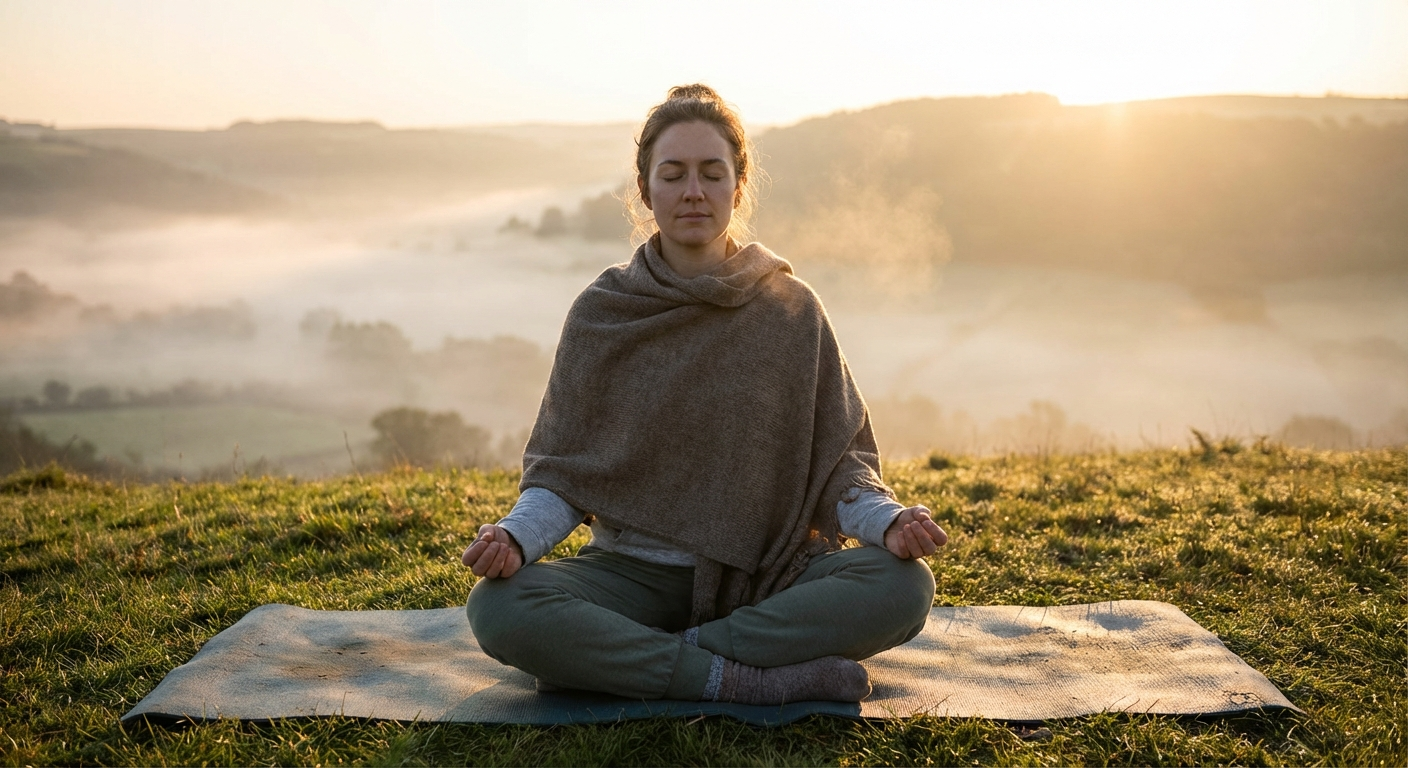
You wake up. Groggy. Reaching for coffee. Your nervous system is still in sleep mode, and nothing—not the shower, not the news, not even your third screen check—seems to fully activate you.
What if I told you that sitting quietly for 20 minutes could produce a more profound energy boost than any caffeine? That's what the Wim Hof method does. Developed by Dutch extreme athlete Wim Hof over decades, this breathing technique combines hyperventilation cycles with breath holds to create a measurable physiological shift in your body—elevated oxygen saturation, increased adrenaline, heightened mental clarity, and sustained energy that lasts for hours.
And it doesn't require an ice bath (though Wim pairs it with cold exposure for maximum effect). For your morning ritual, it's a pure, science-backed protocol you can do sitting on your bed.
The Physics of the Wim Hof Method: How It Works
The Wim Hof method works through controlled hyperventilation and voluntary breath holds—a simple but powerful sequence:
Phase 1: Power Breathing (30-40 Breaths)
You inhale deeply through your nose or mouth, expanding your belly and chest fully, then exhale passively through the mouth without forcing it. You repeat this rapid, rhythmic breathing 30 to 40 times in about 1-2 minutes. This triggers hyperventilation, which lowers your blood CO₂ levels and raises blood pH (alkalosis). Your fingertips may tingle. You might feel lightheaded. This is normal.
Phase 2: Breath Hold (1-3 Minutes)
After the final exhale, you hold your breath as long as feels comfortable—usually 1 to 2 minutes for beginners, extending to 3+ as you practice. You're not straining; you're just remaining calm and present. This creates a mild hypoxic state (lower oxygen), which triggers your sympathetic nervous system and releases norepinephrine (the attention hormone) and adrenaline.
Phase 3: Recovery Breath (15-20 Seconds)
You take one deep, full breath and hold it for 10-15 seconds. This is recovery. Your oxygen saturation spikes, flooding your brain and muscles.
Phase 4: Repeat (3-4 Rounds)
Most mornings, you'll do 3 to 4 complete rounds, with 1-2 minutes of normal breathing between each round. By the end of your session, your blood oxygen is elevated, your nervous system is activated, and your mind is clear and focused.
The Science: What Research Shows
The Wim Hof method isn't mystical. It's measurable physiology, and 2025-2026 clinical research confirms real benefits:
Oxygen & Athletic Performance
A 2025 clinical trial (NCT07399119) found that even a 2.5-minute Wim Hof breathing session increased athletic performance—shoulder press reps jumped from 70 to 89 reps at the same weight (30kg). Why? Blood alkalosis delays fatigue, and elevated oxygen saturation (SpO₂) feeds your muscles more efficiently. Athletes report faster recovery and reduced muscle soreness.
Cardiovascular Health
Regular practice improves heart rate variability (HRV), a key marker of nervous system flexibility and cardiovascular health. Sessions enhance VO₂ max, improve blood pressure regulation, and accelerate heart rate recovery—all signs of a healthier, more resilient system.
Stress & Mental Resilience
The breathing cycle triggers your autonomic nervous system in a controlled way. You're deliberately activating your "fight or flight" response in a safe environment, which trains your nervous system to handle real stressors more gracefully. Research shows reduced cortisol (stress hormone) and improved mood regulation. Over time, you build emotional and physiological resilience.
Immune Function
Studies show Wim Hof practitioners have enhanced immune markers, including increased white blood cell activity. The controlled stress triggers adaptive immunity—your body learns to respond better to threats. Regular practitioners report fewer colds and faster recovery.
Mental Clarity & Focus
The norepinephrine and adrenaline released during the practice don't crash like coffee. They're endogenous (self-generated) and sustained. You get that sharp, present-moment focus for hours without the jitters or the afternoon crash.
Your 20-Minute Morning Protocol
Here's the exact sequence to integrate Wim Hof breathing into your morning:
Timing: Do this right after waking, before coffee. Your nervous system is most responsive in the early morning.
Setup (2 minutes)
Sit comfortably on your bed, floor, or a chair. Ensure your spine is upright but relaxed. You can sit cross-legged, kneeling, or in a chair. Remove any tight clothing around your chest. Keep a pillow nearby—if you feel too lightheaded, you can lie back safely.
Round 1: Power Breathing (2 minutes)
Set a timer for 1.5-2 minutes. Inhale deeply through your nose (mouth is fine too), filling your belly first, then your chest. Exhale passively through your mouth—no force, just let it flow out. Repeat 30-40 times. You're aiming for a rhythm of about 1 breath per second. By breath 20, you'll likely feel tingling in your fingertips and a lightness in your head. This is the method working. Stay calm.
Breath Hold (1-2 minutes)
After the final exhale, hold your breath. Don't strain. Sit with the sensation. You might last 1 minute at first; that's perfect. As you practice, you'll extend to 2-3+ minutes. When you feel the urge to breathe, take your recovery breath.
Recovery Breath (20 seconds)
Inhale deeply and fully, then hold for 10-15 seconds. You'll feel a rush of oxygen and energy. This is the sweet spot.
Rest & Reset (1-2 minutes)
Breathe normally. Notice how you feel—alert, warm, energized. Then begin Round 2.
Repeat Rounds 2, 3, & 4 (12-15 minutes total)
Follow the same sequence. By round 3, you may notice your breath holds extend naturally—your body is adapting. By round 4, you're in a state of sustained alertness and mental clarity.
Close (1-2 minutes)
After your final recovery breath, sit quietly for 1-2 minutes. Breathe naturally. Feel your heartbeat. Notice the warmth in your body. You're now primed for your day. This is the moment to set an intention or do a few minutes of meditation if you choose.
Pro Tips for Your First Week
Start conservative. Your first few breath holds might be just 30-60 seconds. That's fine. Each day, your body will adapt. By week 2, you'll naturally extend to 1.5-2+ minutes.
Never practice in water or while driving. Hyperventilation can cause dizziness or fainting. Always sit safely.
Avoid on an empty stomach if you're sensitive. A light snack 30 minutes before is fine. Don't do this immediately after a heavy meal.
Expect mild tingling and lightheadedness at first. This is hyperventilation doing its job. It passes quickly and is harmless. If you feel anxious, slow your breathing or stop and breathe normally.
Do NOT hold your breath if you're pregnant, have heart issues, or are epileptic. Consult a doctor first. The method is powerful and isn't for everyone.
Track your progress. Keep a simple log: date, number of rounds, breath hold duration, how you felt during your day. Within 2 weeks, you'll notice sustained energy, better focus, and improved mood. This data motivates consistency.
Why This Works Better Than Coffee (For Most People)
Coffee hits your adenosine receptors and blocks sleepiness signals. You feel awake, but you're still in a mild sympathetic (stressed) state. Plus, by 2 PM, you crash.
Wim Hof breathing generates your own adrenaline and norepinephrine—endogenous activation. Your nervous system learns to sustain this state because you're training it daily. Over weeks, your baseline alertness rises. Your sleep improves (paradoxically, because you're training nervous system flexibility). You don't need coffee to function; you choose it for the taste.
This is why Navy SEALs, Olympic athletes, and high-performance founders have adopted the method. It's not magic. It's neuroscience applied intelligently.
The Video: Guided Wim Hof Breathing for Beginners
Watching an expert guide you through the method is invaluable. Here's a highly-recommended tutorial:
This guided session walks you through the exact breathing rhythm, timing, and recovery sequence. Follow along for your first 3-4 sessions until you internalize the pattern. After that, you can practice independently each morning.
Integration Into Your Morning Ritual
Here's how Wim Hof breathing fits into a complete morning routine:
5:30 AM - Wake, hydrate (16 oz water)
5:35 AM - Wim Hof breathing (20 minutes)
5:55 AM - Short meditation or intention-setting (5 minutes)
6:00 AM - Cold shower or contrast shower (if desired)
6:15 AM - Breakfast and morning planning
This sequence activates your nervous system, stabilizes blood sugar, and primes your mind—all before 6 AM. By the time you sit down to work, you're operating at 80-90% of your cognitive and physical capacity. The effect compounds daily.
The Bottom Line: A Superpower for Your Mornings
The Wim Hof method is one of the few morning practices with measurable, reproducible benefits in real-world performance. It costs nothing (no supplements, no devices). It takes 20 minutes. And it works.
Start this week. Do one 20-minute session tomorrow morning. Notice how you feel during your day—your energy, your focus, your resilience to stress. By day 5, you'll recognize the power. By day 30, it will feel like a non-negotiable part of your morning, like brushing your teeth.
You're not just breathing. You're training your nervous system to be stronger, more flexible, and more resilient. And you're doing it with a tool that's always with you: your breath.
Recommended Products on Amazon
Want to make this ritual easier to stick with? These product searches are a good place to start:
This post contains affiliate links. If you purchase through our links, we may earn a small commission at no extra cost to you.