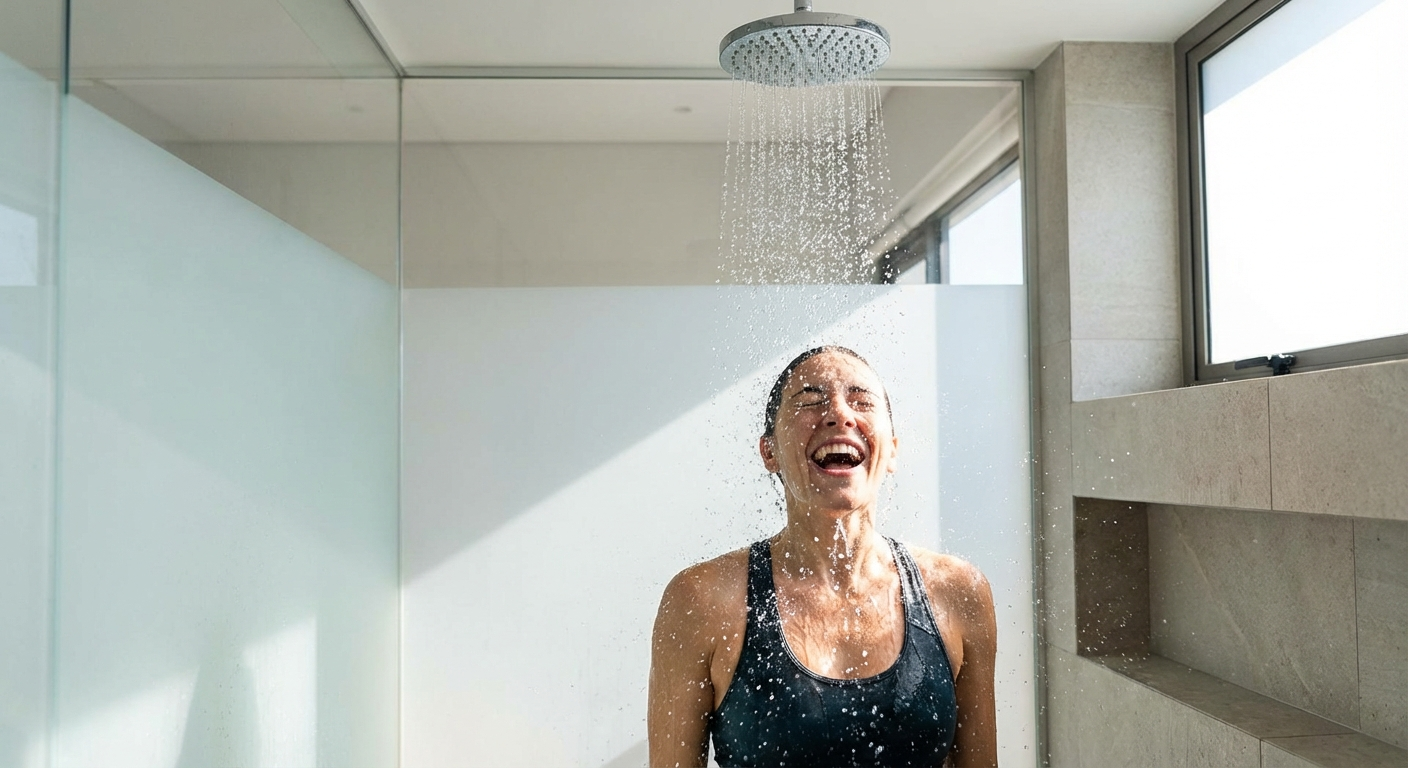
Most of us reach for coffee the moment we wake up. But what if there's a faster, more powerful way to activate your mind and body? Welcome to the cold shower—one of the most underrated morning rituals that delivers measurable results in less than five minutes.
The science is compelling. Cold water exposure triggers a cascade of physiological changes: increased norepinephrine release (the neurotransmitter that sharpens focus), enhanced circulation, and a boost in dopamine that lasts hours. Unlike caffeine, which creates a crash, cold exposure builds sustainable energy while training your nervous system to handle stress gracefully.
How Cold Water Works on Your Body
When you step into cold water, your body doesn't panic—it adapts. Your skin receptors send signals to your brain, triggering what's called the cold shock response. Within seconds:
Breathing deepens. Your respiratory rate increases, flooding your body with oxygen. This is why cold showers feel invigorating—you're literally getting more oxygen to your muscles and brain.
Norepinephrine surges. This neurotransmitter increases alertness, attention, and mood. Studies show norepinephrine levels spike 3-5 times higher during cold exposure compared to warm water. This is why you feel *awake* after a cold shower, not groggy.
Heart rate increases temporarily. Your cardiovascular system gets a mini-workout. Over time, regular cold exposure strengthens your heart and improves circulation—benefits that persist long after the shower ends.
Dopamine rises. Cold water immersion triggers dopamine release, the neurotransmitter linked to motivation, mood, and reward. A single cold shower can elevate dopamine for up to 2-3 hours, making you more driven to tackle your day.
The Mental Toughness Factor
Beyond physiology, cold showers build psychological resilience. Every morning, you face a challenge—discomfort—and you choose to walk through it anyway. This trains your brain for adversity.
Neuroscientist Andrew Huberman has documented this extensively: regular cold exposure reduces anxiety over time and improves your ability to tolerate stress. You're literally rewiring your nervous system to stay calm under pressure. Athletes, military personnel, and high-performers swear by this practice for exactly this reason.
When you can handle 30 seconds of cold water first thing in the morning, that difficult work email or challenging conversation later feels manageable by comparison. You've already proven to yourself that you can do hard things.
Getting Started: The Right Way
You don't need to dive into an ice bath tomorrow morning. Start small and build tolerance:
Week 1-2: Cold rinse. Take your normal warm shower, then end with 15-20 seconds of cold water on your limbs (feet, hands, forearms). Let your body acclimate.
Week 3-4: Gradual cool shower. Take your entire shower in comfortably cool water—not ice cold, just cool. Aim for 2-3 minutes. Your nervous system will still respond.
Week 5+: True cold exposure. Now you're ready for 30-60 seconds of genuinely cold water. This is where the neurochemical magic happens. You'll know—your body will tell you.
Pro tip: Don't gasp or panic. When you enter cold water, the key is controlled breathing. Take slow, deep breaths through your nose. This calms your nervous system and makes the experience feel less shocking. You're training your mind to stay calm under stress—that's the real win.
The Science Says It Works
Research backs this up. A 2022 study in the Journal of Clinical Medicine found that regular cold water immersion improved mood, reduced inflammation markers, and increased stress resilience. Participants who did 3-minute cold showers (30°C / 86°F) three times per week showed measurable improvements in anxiety levels within four weeks.
Another study by Wim Hof researchers demonstrated that voluntary breathing combined with cold exposure increased white blood cell counts and reduced inflammatory cytokines—essentially boosting immune function. The effect is real.
Even a single cold shower triggers acute changes: increased core body temperature post-shower (your body warms itself naturally), heightened alertness for hours, and improved vasodilation (blood vessel flexibility) that supports cardiovascular health.
When to Do It (And When to Skip)
The best time for a cold shower is within 30-60 minutes of waking. This is when your cortisol (your natural stress hormone) is naturally highest—you're working *with* your circadian rhythm, not against it.
Avoid cold showers if you:
• Have uncontrolled high blood pressure or heart conditions (check with your doctor first)
• Are ill or recovering from illness
• Are pregnant without prior cold exposure experience
• Have severe anxiety around cold water
For everyone else? You're good to experiment. Start conservative, build gradually, and listen to your body. There's no shame in a cool shower instead of a cold one—the benefits still apply.
Beyond the Shower: Lasting Energy
What makes cold showers different from other energy hacks is staying power. Here's what you can expect:
Immediate (0-30 minutes): Peak alertness, increased body temperature, sharp focus. This is your window for deep work or important tasks.
Short-term (1-3 hours): Sustained elevation in dopamine and norepinephrine. Mood is lifted, motivation is high, anxiety is lower.
Long-term (weeks and months): Your nervous system becomes more resilient. You handle stress better. Your baseline mood improves. You sleep better at night because your circadian rhythm is reinforced by this morning anchor.
Stack it with other rituals for compound effect: cold shower + morning hydration + stretching + sunlight = an unbeatable morning. You're not just waking up—you're activating your entire system.
Cold Showers vs. Coffee: A Real Comparison
Let's be honest: coffee is convenient. You brew it, you sip it, boom—alert. But here's where the science diverges.
Coffee delivers caffeine, which blocks adenosine receptors in your brain (adenosine is the molecule that makes you feel sleepy). This is indirect—it's masking drowsiness, not actually energizing you. Once your body metabolizes the caffeine (half-life: 5 hours), the adenosine comes roaring back, and you crash. Many people then drink more coffee to compensate, creating a cycle.
Cold showers, by contrast, directly activate your nervous system. You're not masking anything—you're *actually* activating your body's wake-up mechanisms. Norepinephrine, dopamine, and adrenaline all rise naturally. Your parasympathetic nervous system engages, your breathing deepens, and your body temperature rises post-shower. This is physiology in action, not chemical masking.
The kicker? The benefits last longer. Coffee wears off in hours. The neurochemical boost from a cold shower can last 6-8 hours, and the long-term benefits from consistent cold exposure—reduced anxiety, better stress resilience, improved sleep quality—compound over weeks and months.
Best practice: if you're a coffee drinker, enjoy it. But wait 30-60 minutes after your cold shower before caffeine. This lets your natural dopamine surge finish, then you layer caffeine on top. You get the natural activation plus the focused alertness from coffee—without the crash.
Common Misconceptions Cleared Up
Myth 1: Cold showers shock your heart and are dangerous.
False. Your heart is built for this. Cold exposure causes a temporary heart rate increase, which is *good* training for your cardiovascular system. Athletes use cold exposure specifically to strengthen their hearts. If you have diagnosed heart disease or uncontrolled hypertension, check with your doctor first. But for most healthy people, the cardiovascular benefit outweighs any short-term spike.
Myth 2: You'll catch a cold from a cold shower.
Also false. Cold showers don't cause illness—viruses do. In fact, regular cold exposure *improves* immune function. Studies show cold exposure increases white blood cell counts and reduces inflammatory markers. You're less likely to get sick, not more.
Myth 3: Cold showers are only for intense biohackers.
Nope. Anyone can start small. Even a cool (not cold) shower has measurable effects. There's no "biohacker" minimum. A grandmother doing a 20-second cool rinse gets real benefits. You're not in competition with extreme athletes doing ice baths. Start where you are.
Myth 4: Women shouldn't do cold showers (hormonal concerns).
No scientific basis for this. Women can absolutely benefit from cold exposure. In fact, women show the same norepinephrine and dopamine responses as men. If anything, the mood and stress-resilience benefits may be particularly valuable during hormonally sensitive times. Listen to your body, but there's no gender-based contraindication.
Tracking Progress: How to Know It's Working
After two weeks of cold showers, pay attention to these markers:
Energy levels. Do you feel more naturally alert in the morning? Are you reaching for coffee earlier or later? Most people notice they either skip coffee or delay it by 30-60 minutes.
Mood and resilience. Notice how you respond to minor frustrations throughout the day. People often report a subtle but noticeable patience increase and lower irritability.
Sleep quality. You may sleep deeper or wake up more easily. Your circadian rhythm is being reinforced by this clear morning anchor.
Physical response to stress. Over time, you'll notice your baseline heart rate lower during stressful moments. You're literally training your nervous system to stay calmer.
Temperature tolerance. You won't feel cold as easily. Your body becomes better at thermoregulation.
Why This Matters
In a world of infinite caffeine, supplements, and biohacks, the cold shower is beautifully simple. It costs nothing. It requires no equipment. It takes five minutes. And the science says it works as well as or better than most energy supplements on the market.
More importantly, it's a daily practice in choosing discomfort over ease. That's where real growth lives. Every morning, you're training yourself to be tougher, more resilient, more capable. The energy boost is just the bonus.
Here's the deeper truth: most people talk about wanting to change their lives, but they don't follow through because it requires doing hard things. A cold shower every morning is a microdose of that. It's small enough to be sustainable, but significant enough to prove to yourself that you can do hard things. That confidence compounds. Suddenly, that difficult project at work isn't so scary. That fitness goal seems achievable. That conversation you've been avoiding? You can handle it.
The cold shower isn't just about energy. It's about identity. You're becoming someone who does hard things before breakfast.
Try it for two weeks. Just 30 seconds of cold water at the end of your shower. See how you feel. Odds are, you'll become one of those people who swears by it—and can't imagine starting their day any other way.
Recommended Products on Amazon
Want to make this ritual easier to stick with? These product searches are a good place to start:
This post contains affiliate links. If you purchase through our links, we may earn a small commission at no extra cost to you.